

There are two works I keep coming back to when I think about what the male torso means to artists. Not because they are the most famous pieces in the world, though one of them comes close. Because both of them solve a problem that figure artists have been wrestling with forever: how do you make a body feel alive when it is made of stone.
The Belvedere Torso and Myron's Discobolus are separated by several centuries and a completely different set of artistic intentions. Together they map out something important about how the Western art tradition has understood the male form, and why that understanding still feeds into what artists are making today.
The Belvedere Torso: A Fragment That Changed Everything
The Belvedere Torso sits in the Vatican Museums without a head, without arms, without legs. What remains is the core of a seated male figure, carved in marble sometime in the first century BCE by an Athenian sculptor named Apollonios. The inscription on the base reads simply: made by Apollonios, son of Nestor, Athenian.
For centuries it sat largely ignored. Then the Renaissance happened and suddenly every serious artist in Europe was making the trip to Rome to draw it. Michelangelo was so taken with it that he reportedly refused to have it restored, saying it was perfect as it was. The way how Michelangelo used the Belvedere Torso shaped his entire approach to the male figure is one of the more fascinating threads in Western art history.
What the torso does is remarkable for something so incomplete. The twist of the spine, the tension across the back muscles, the way the whole form seems to be in the middle of some enormous effort, all of it reads as intensely alive. The absence of limbs forces your eye to the core. Nothing distracts from the essential architecture of the body.
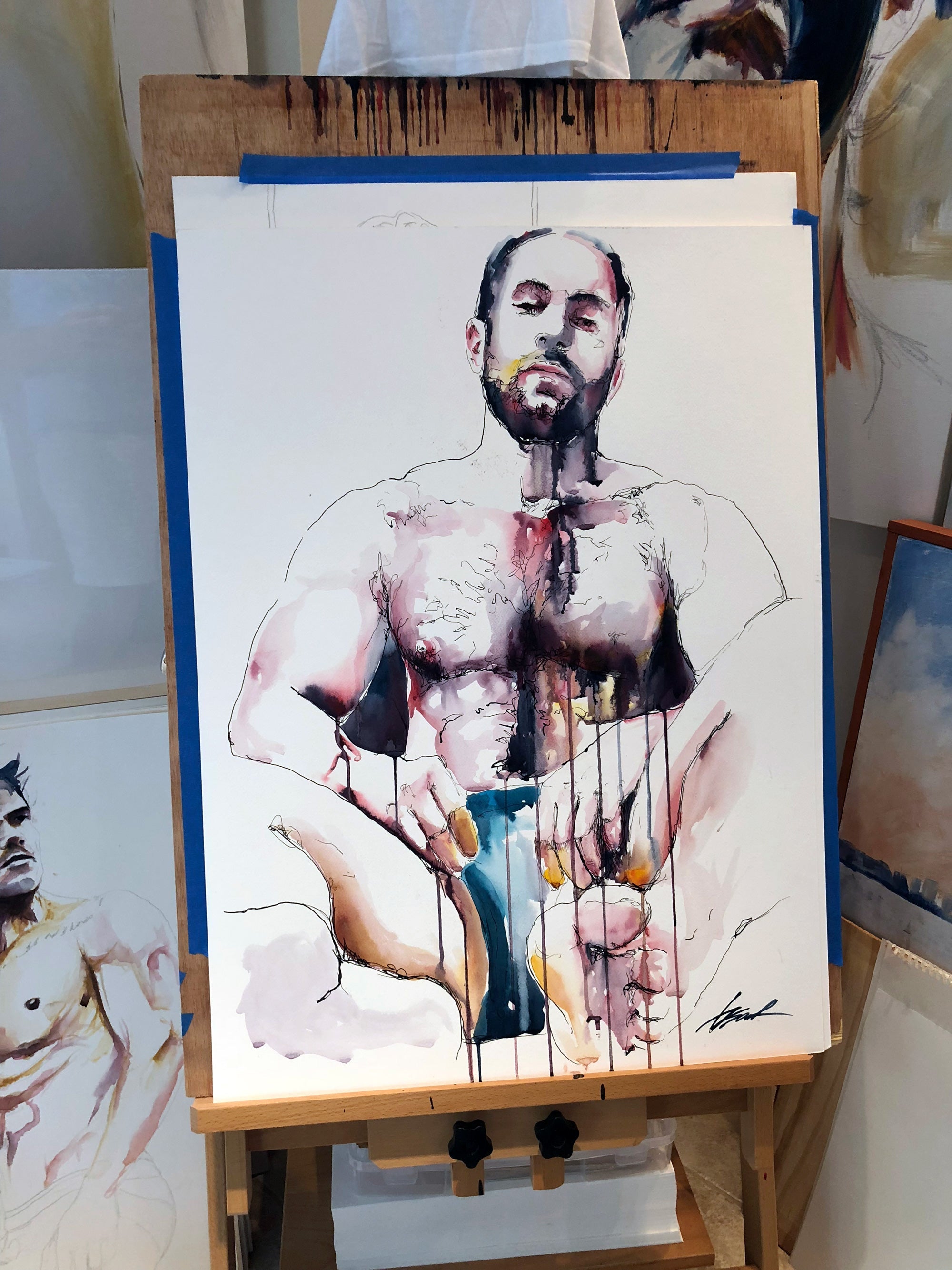
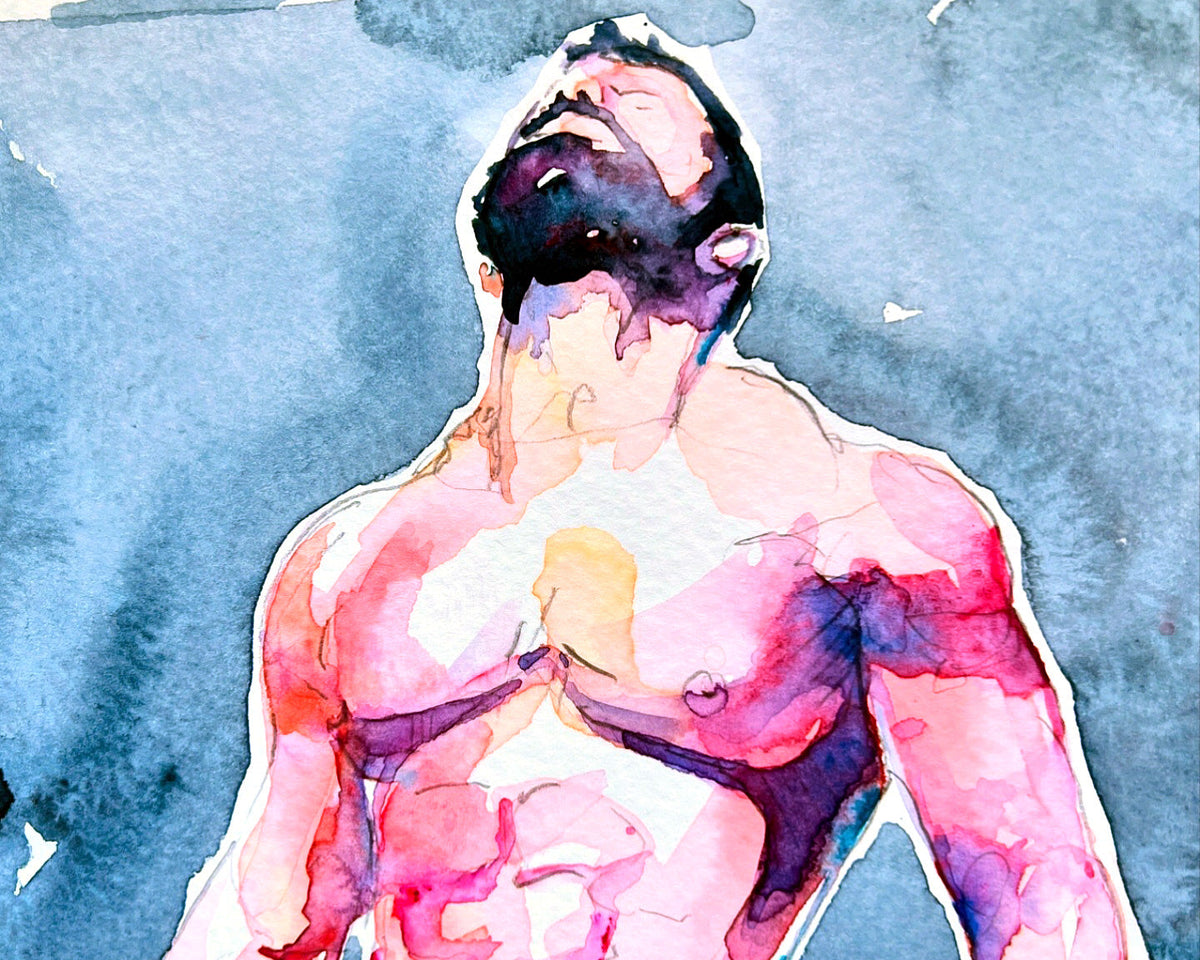
That is a lesson that has not aged. When I work on a male torso in ink or watercolor, the same question comes up every time: where is the tension, and how do you make the viewer feel it.

The Discobolus: The Body at the Moment of Maximum Tension
Myron's Discobolus solves the same problem differently. Where the Belvedere Torso achieves its power through stillness and mystery, the Discobolus is frozen at the exact peak of physical action. The original bronze from around 450 BCE is lost. What survives are Roman marble copies, and even in translation the image is extraordinary.
The figure is an athlete mid-throw, body coiled, weight transferred, everything in the body gathered into one moment just before release. The Greek concept of kalokagathia sits right at the center of this work: the idea that physical beauty and moral virtue are not separate things but expressions of the same underlying excellence.
What strikes me most is the restraint. The face is completely calm. The body is at maximum tension and the expression registers nothing. That gap between physical extremity and emotional stillness is something Greek sculptors understood at a level that still feels ahead of its time.

What These Two Works Still Mean for Artists Today
Both of these works belong to a longer conversation about the male torso as a cross-cultural art medium, one that runs from ancient Athens through the Renaissance and into contemporary studios. The male torso keeps returning as a subject because it is genuinely difficult. There is nowhere to hide. The form either works or it does not.
Here is what I take from both of them when I sit down to work:
- The torso is enough. You do not need the full figure to communicate everything.
- Tension lives in the spine and across the back, not just in the arms and legs
- Stillness and motion are not opposites in figure work. The best pieces hold both.
- Absence, whether through fragmentation or negative space, can be more powerful than completeness
- The relationship between surface and structure is where the real drawing happens
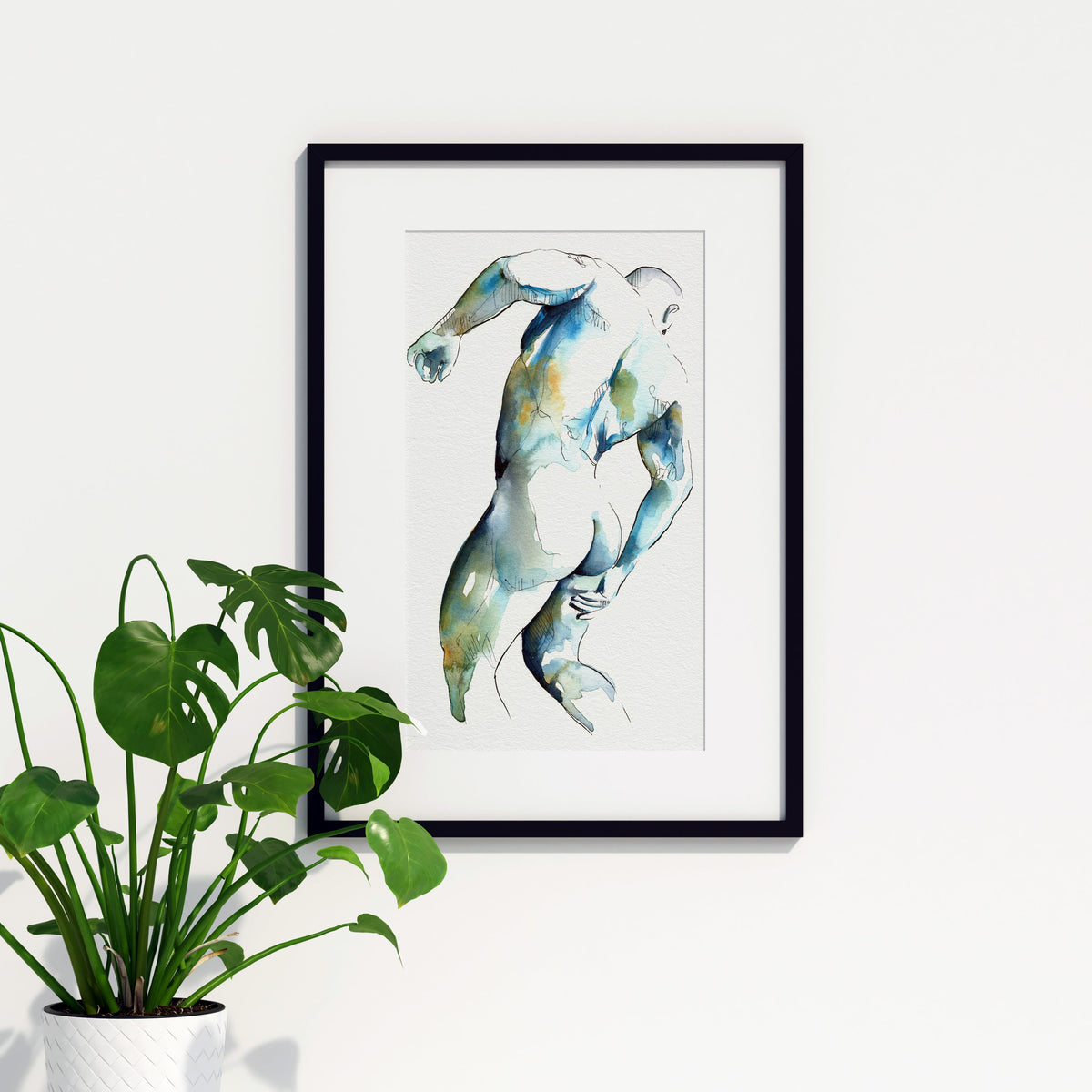
My ink and line work comes directly out of this tradition. The torso as subject, reduced to what is essential, trying to find the tension in the form without overstating it. It is the same problem Apollonios and Myron were working on two thousand years ago.
The full range of male figure art prints in my shop includes a number of torso-focused pieces if you want to see where that thinking lands in contemporary work.
Share:
11 Male Nude Paintings That Made Art History
A Beginner's Guide to Buying Emerging Male Nude Art