



There is before Michelangelo and there is after Michelangelo. That is not an exaggeration. It is simply what happened. When he finished the David in 1504 and unveiled the Sistine Chapel ceiling in 1512 he did not just create masterworks. He reset the terms of what male figure art could aspire to.
Artists who came after him had to reckon with what he had done. Some spent their careers in direct conversation with it. Others tried to escape it entirely. But nobody who painted or sculpted the male figure after the 16th century did so without Michelangelo somewhere in the background.
I think about this sometimes when I am working. The tradition I am part of runs through him whether I want it to or not. Here is what he actually did and why it still matters.
What Florence Made Possible
Florence in the late 15th century was one of the most concentrated environments for artistic ambition that has ever existed. The Medici were funding work across every discipline. Humanist philosophy was putting the human body back at the center of serious thought after centuries of medieval abstraction. Artists had access to ancient sculpture, to live models, to anatomical study, and to each other.
Michelangelo grew up inside all of that. Studying in the Medici sculpture garden gave him access to ancient works that most artists never saw. Corpse dissection taught him the body from the inside out. Thousands of obsessive drawings came before he ever committed to a final work. By the time he carved the David he was not guessing at the male figure. He knew it in a way that very few artists before him had.
The Galleria dell'Accademia in Florence houses the David and seeing it in person is a genuinely different experience from seeing photographs. The scale alone changes everything.

David and What He Changed
The David is not just a beautiful sculpture. It is a specific argument about what the male figure can carry.
Before Michelangelo male figure art in the Western tradition was largely either symbolic or decorative. Figures represented ideas, virtues, gods, biblical figures. They were not primarily about the particular human being depicted.
David changed that. He is specific. His hands are too large, scaled for viewing from below but also just slightly off in a way that makes him feel real rather than ideal. His expression is tense and inward, caught in the moment before the fight rather than the moment of triumph. Thinking. Afraid. Doing it anyway.
That combination of physical idealism and psychological specificity was new. It gave the male figure an interior life that it had rarely had before. My post on 11 male nude paintings that made art history covers David alongside other works that changed the conversation around the male figure, and the contrast between David and what came before him is striking.

The Sistine Chapel and the Figure in Motion
If the David showed what the male figure could be at rest, the Sistine Chapel ceiling showed what it could be in motion.
The figures across that ceiling, the prophets, the sibyls, the ignudi, the central scenes of creation and fall, are among the most physically complex and emotionally varied figures ever painted. Each one is doing something different with their body. Each posture carries specific psychological and narrative information.
What Michelangelo understood was that the body is a language. Every position, every tension, every gesture communicates something. His figures are conversations happening in paint and plaster between a body and everything it has ever felt.
That understanding runs through everything serious that has been done with the male figure since. The following qualities define work that carries real power:
- physical specificity that goes beyond generic idealism
- psychological interiority expressed through posture and gesture
- the body as carrier of emotional and narrative information
- tension between ideal form and particular human reality
These are Michelangelo's contributions. They are still the standard.

Why It Still Matters Today
Contemporary male figure art is in conversation with Michelangelo even when it is actively arguing against him. The artists who strip away idealization, who work with vulnerability and ordinariness rather than heroism, are defining themselves partly in relation to what he established.
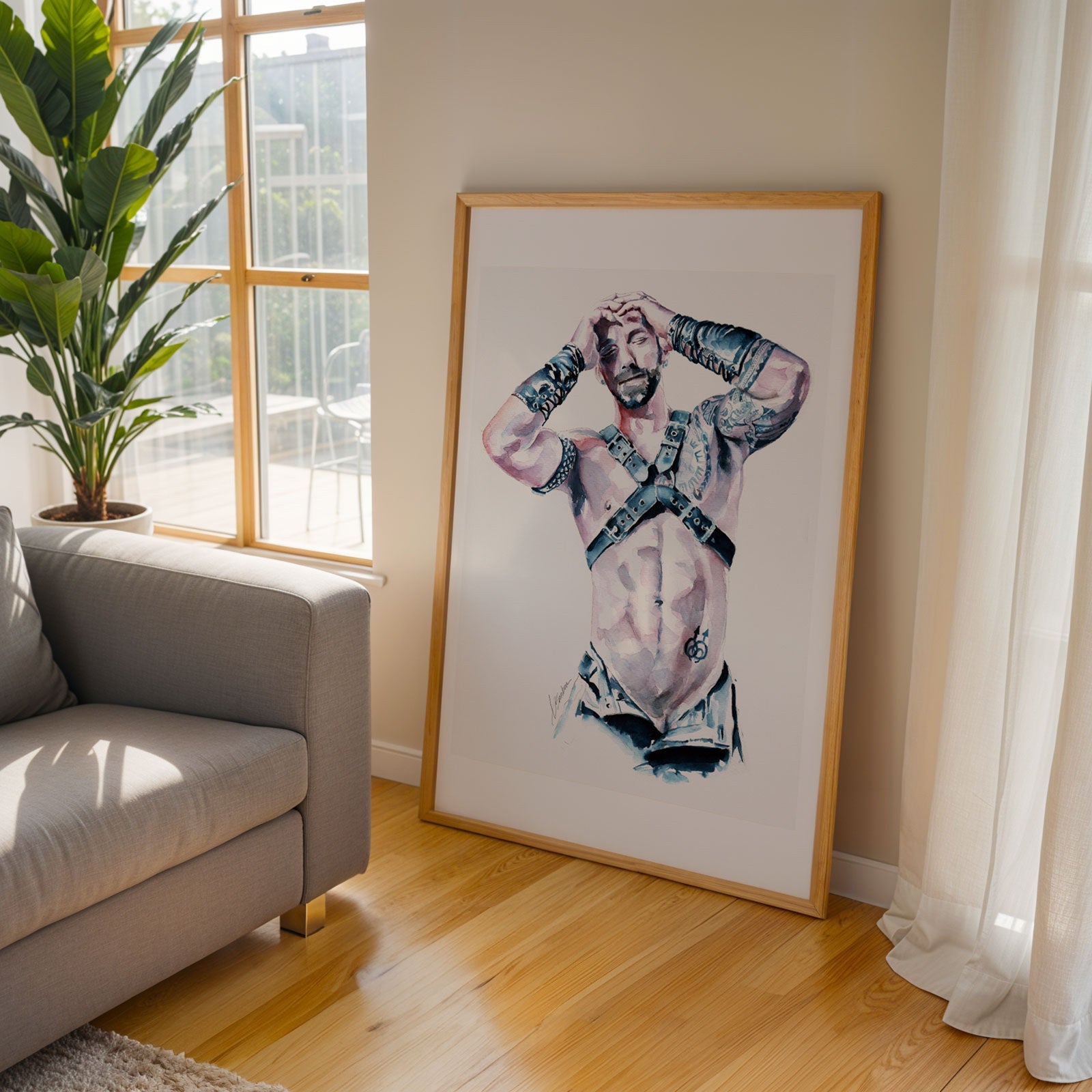
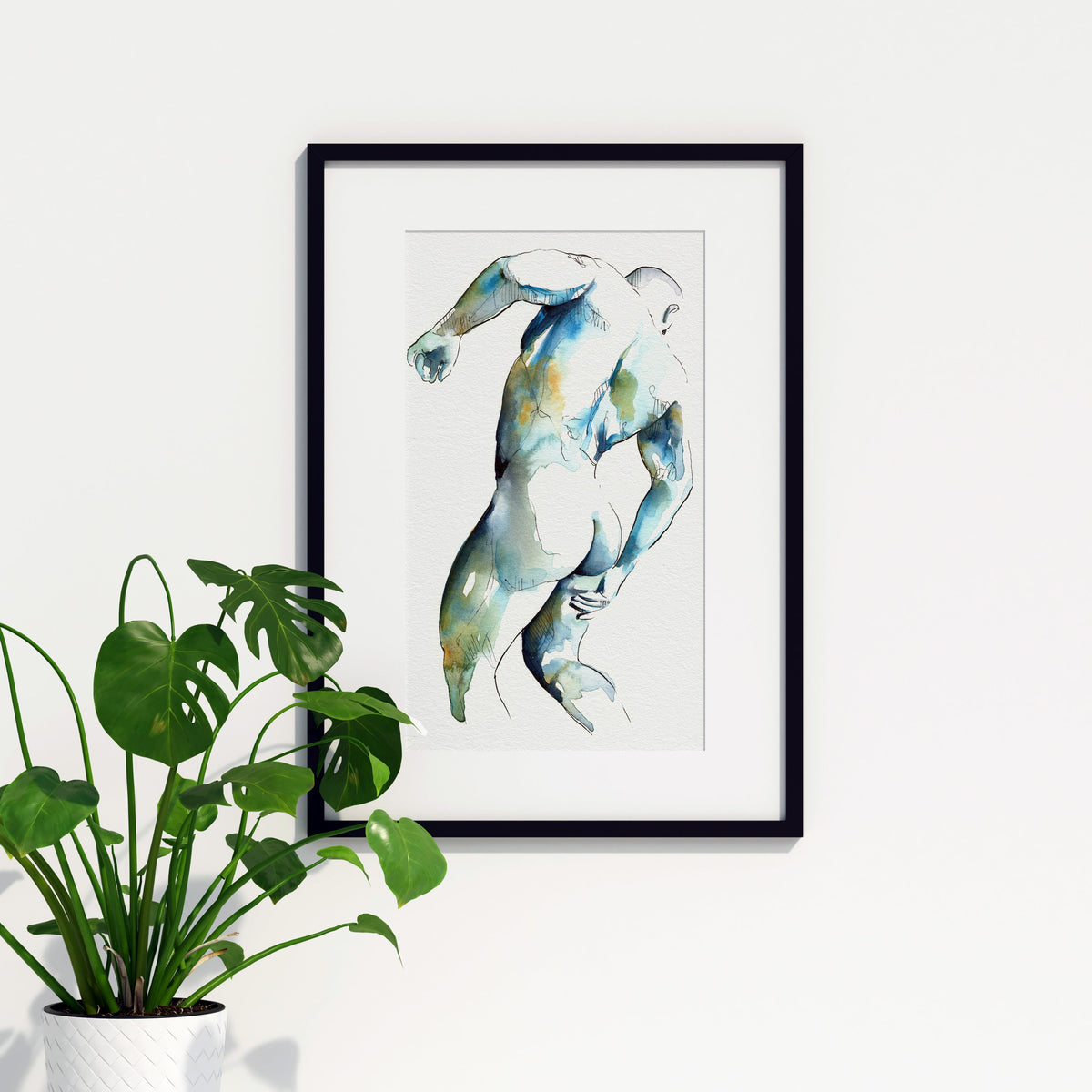
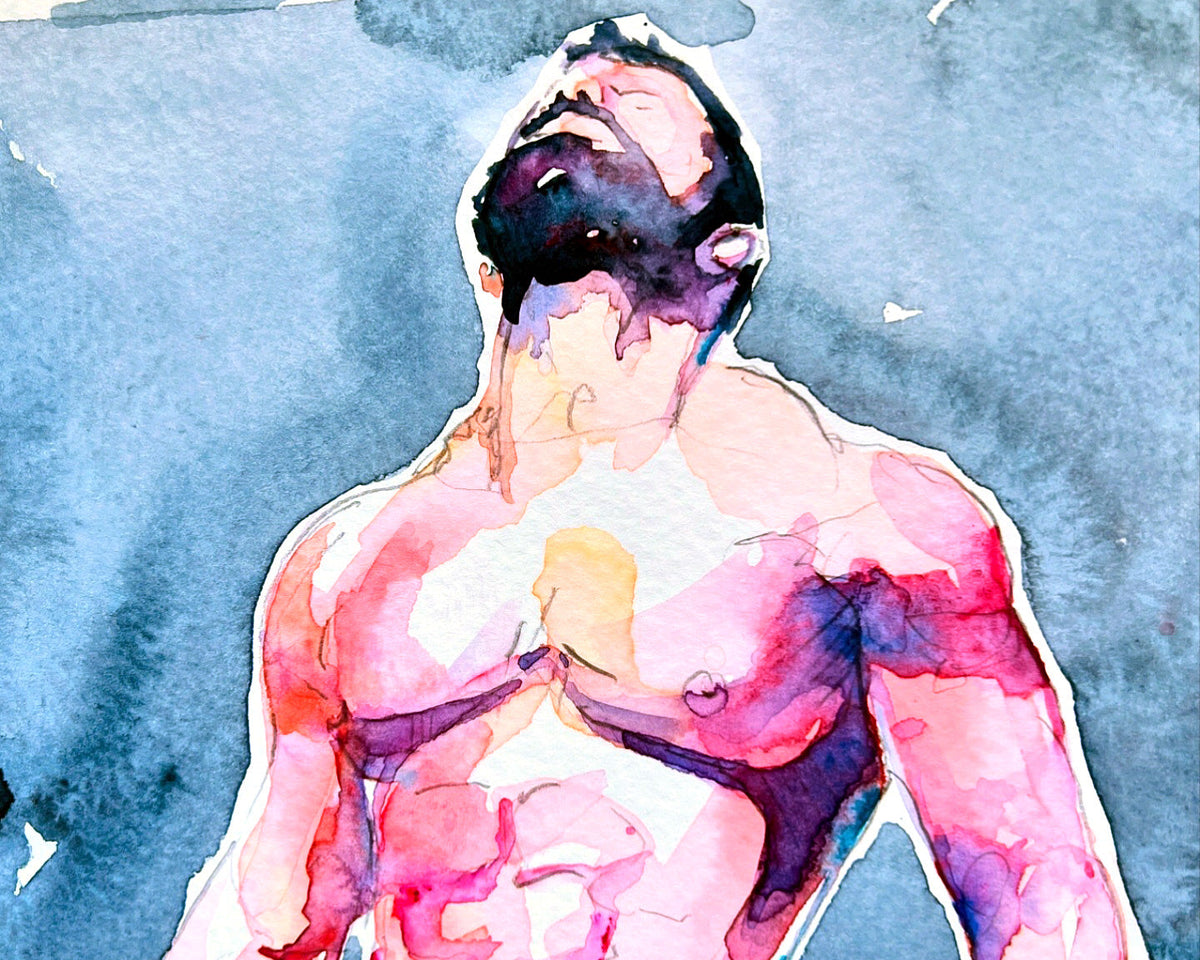
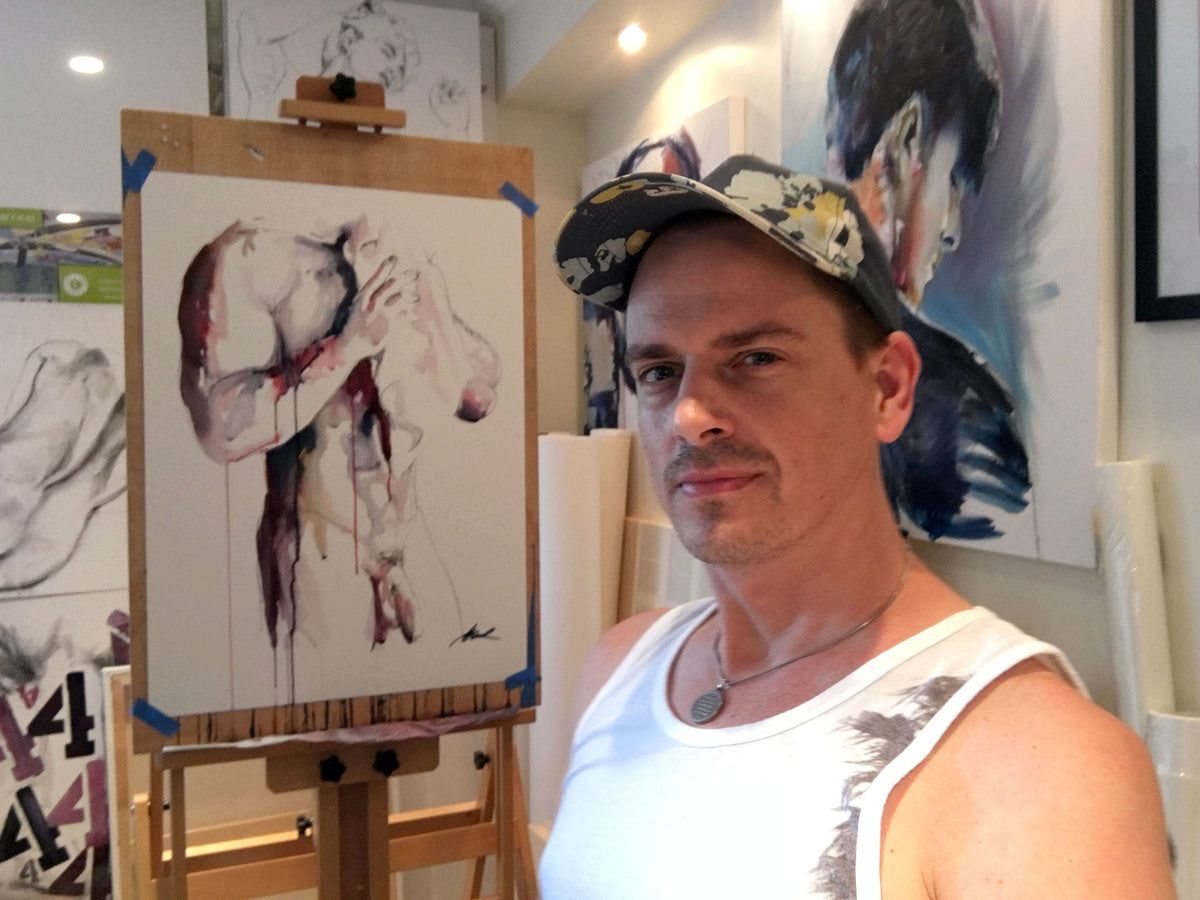
I am no different. When I paint the male figure I am not trying to make something Michelangelo would have recognized. My New Work is looser, more intimate, less monumental than anything in his tradition. But I am still asking the same questions he was asking. What can a body carry? What does a posture say? How much can a single figure communicate about what it means to be human?
Those questions did not originate with Michelangelo. But he asked them at a scale and with an intensity that nobody has quite matched since. And that means anyone who comes after him is working in the long shadow of what he made possible.
If you want to understand the broader history of how the male torso specifically has been treated across art history, my post on the male torso in art picks up some of those threads in more depth.
My original paintings are where my own version of that conversation lives most directly. Different materials, different scale, different sensibility. But the same essential question that Michelangelo spent his life trying to answer.
Share:
The Male Torso in Art: A Cross-Cultural History
Musée d'Orsay Male Nude Art: What 200 Years Forgot to Say