


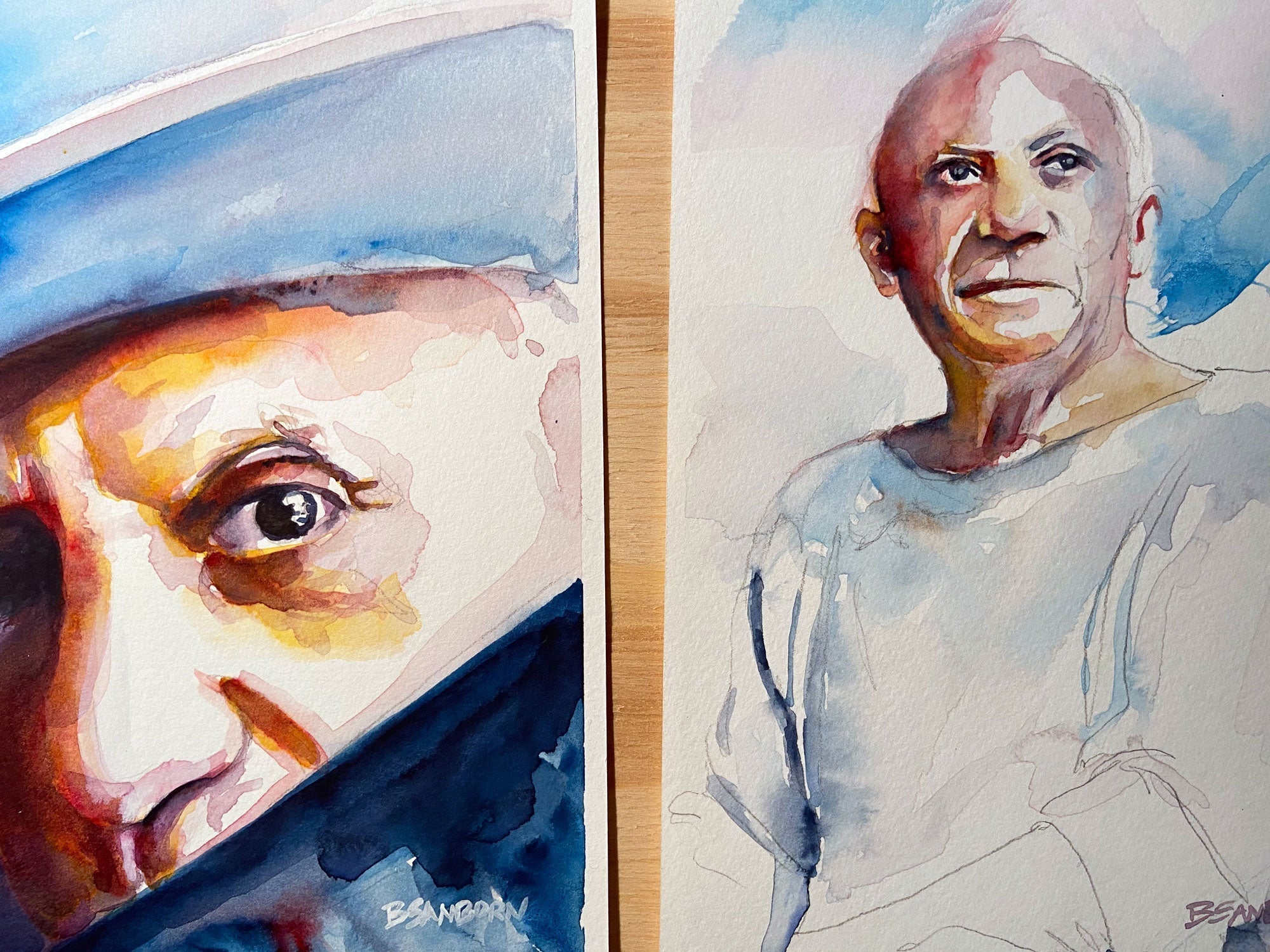
One of the most common questions I get from collectors is whether to buy an original watercolor or a print. It comes up constantly, and I understand why. The choice feels significant. You want to get it right.
Here is the honest answer. Both are worth collecting. They just do different things, live differently in a space, and serve different collecting goals. Once you understand those differences the choice usually becomes pretty clear.
What Makes an Original Watercolor Different
An original watercolor is a singular object. There is exactly one of it in the world and there will never be another. Every mark, every wash, every happy accident of water and pigment happened once and only once. That is not something a print can replicate, no matter how precise the reproduction technology.
When you live with an original you are living with the actual surface the artist touched. The texture of the paper. The variations in the paint where it pooled and dried. The places where the brush hesitated or moved with confidence. These are things you notice differently over time, details that reveal themselves slowly the longer a piece hangs on your wall.
Originals also carry a different kind of presence in a room. They have a physical weight and intimacy that stops people. Collectors who own originals often describe them as feeling alive in a way that prints don't, not because prints are lesser, but because originals carry something unrepeatable.
My original paintings are where the practice lives most directly. Each one is a single attempt to catch something true, and once it is gone it is gone.
What Makes a Print Worth Collecting
A print is not a compromise. It is a different kind of object with its own genuine value.
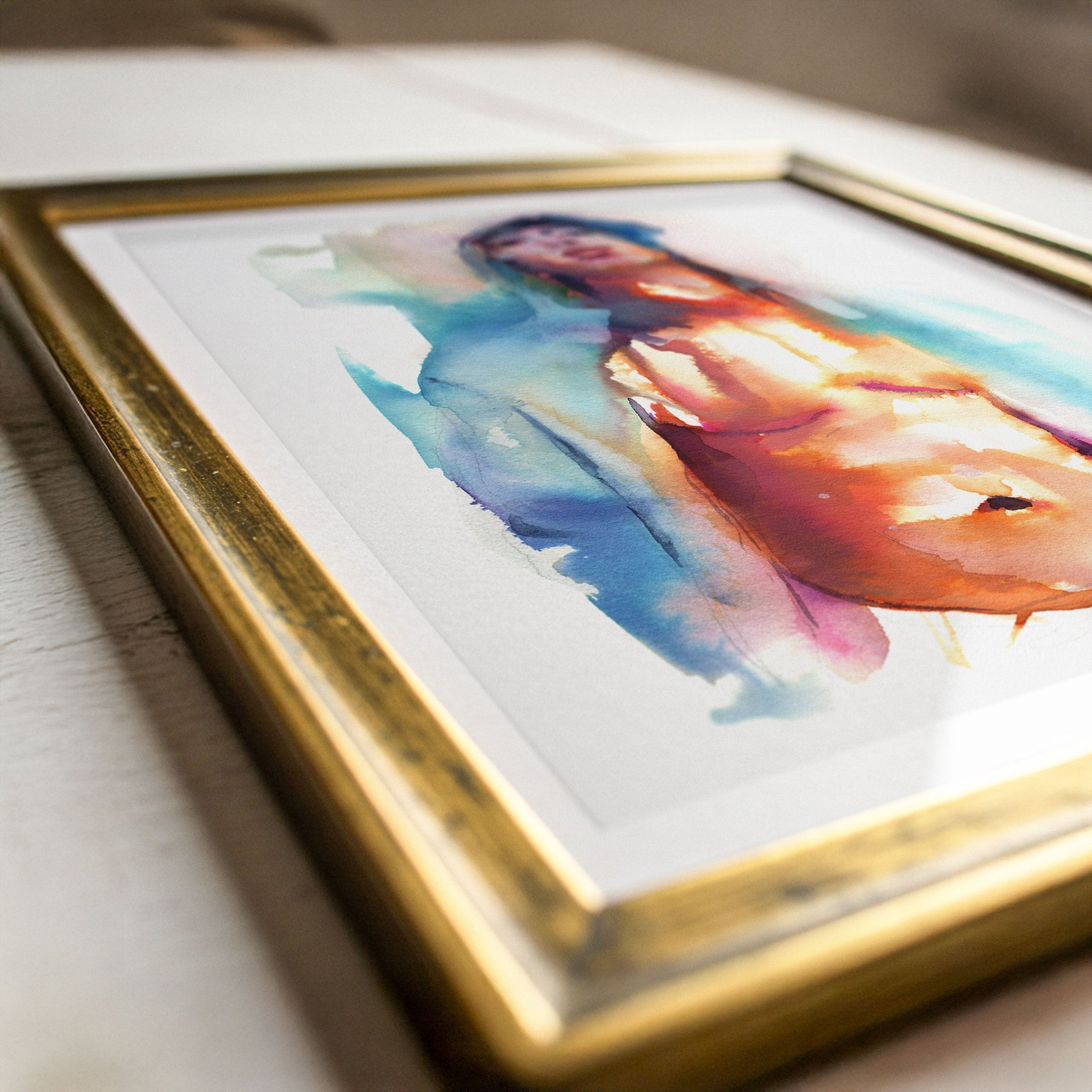
A high quality giclée print made from archival inks on fine art paper is extraordinarily faithful to the original. The color, the composition, the emotional content of the piece, all of it translates. What you get is access to an image that might otherwise be unattainable, either because the original has already sold or because it exists at a price point beyond your current budget.
Prints also let you collect more broadly. Instead of one original you can build a collection of several prints, explore different bodies of work, live with multiple pieces across different rooms. That kind of collecting has its own rewards. The collector whose bedroom wall holds four framed prints from the same series has created something curatorially intentional that a single original could not achieve.
My male figure art prints are produced to museum quality standards and are limited in edition. They are designed to be collected, not just purchased.

When to Choose an Original
An original makes the most sense when:
- the specific piece has stopped you completely and you cannot imagine not owning it
- you want something truly singular that will only become more significant over time
- you are building a serious collection and want to support an artist's practice directly
- you have a specific wall or space that calls for that level of presence and intimacy
If you are new to collecting and want to understand more about what to look for, my post on why collectors are drawn to contemporary male figure art covers the emotional side of that decision in more depth.

When to Choose a Print
A print is the right choice when:
- you love the image and want to live with it at an accessible price point
- you are building a collection across multiple pieces or a series
- you want to explore an artist's work before committing to an original
- you have a specific wall that calls for several pieces rather than one
Prints are also the right choice when you want consistency across a series. Four matching framed prints from the same body of work create a visual conversation that is genuinely compelling. My Collector Favorites is a good place to find pieces that collectors return to most often, and my New Work always reflects where the practice is right now.
If you are just starting out, my post on buying emerging male nude art has practical guidance on how to approach that first purchase with confidence.
The Question Underneath the Question
Most collectors who ask me whether to buy an original or a print are really asking something else. They are asking whether they are allowed to want what they want. Whether the piece that stopped them is worth the investment. Whether their instinct can be trusted.
It can.
The best collecting decisions I have ever seen came from people who trusted the piece that stopped them and figured out the practical details afterwards. Whether that piece is an original watercolor or a carefully produced print, what matters is that it means something to you and that it changes the room it lives in.
Start there. The rest follows.


Share:
Why Collectors Are Drawn to Contemporary Male Figure Art
7 Contemporary Artists Exploring the Male Figure Today