



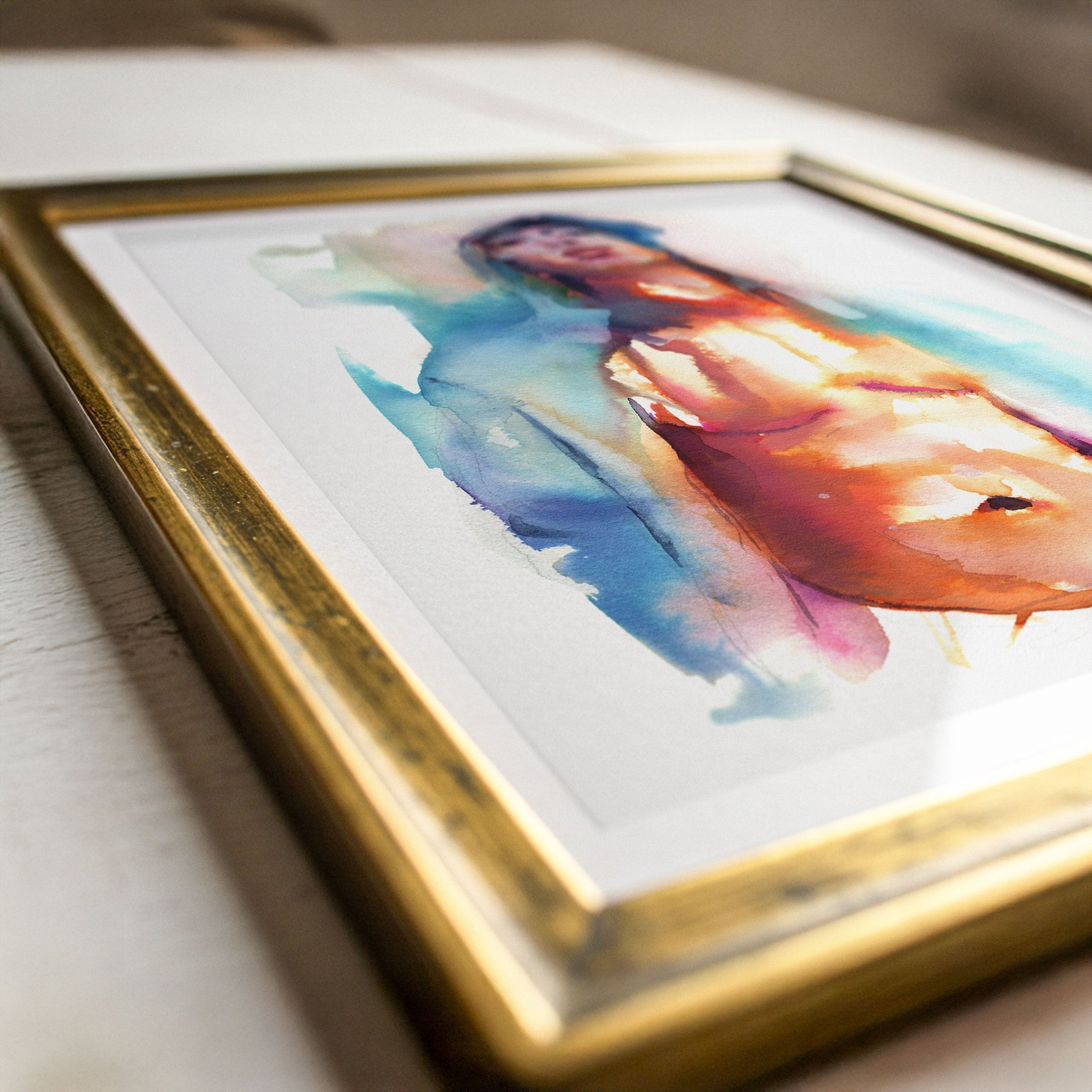
A watercolor art print made on archival paper with quality inks can last well over a hundred years. The same print handled carelessly or framed incorrectly can start to show damage within a few years. The difference is almost entirely in how it is treated after it leaves the printer.
I have been producing and selling fine art prints for years and the questions I get most often from collectors are not about what to buy. They are about what to do with it once it arrives. This is that guide.
What Archival Actually Means
Before anything else it helps to understand what makes a print worth protecting in the first place. My prints are produced on acid-free fine art paper using archival pigment inks. Archival means the materials are designed to resist fading, yellowing, and deterioration over time.
Archival paper contains no acid, which is the main cause of yellowing and brittleness in paper over time. Archival inks are pigment based rather than dye based, which means they are significantly more stable under light exposure. A properly cared for archival print will outlast most of the furniture in the room it hangs in.
But archival materials only protect you so far. How you handle, store, and frame the print matters just as much.
How to Handle Your Print
Watercolor art prints on fine art paper are more delicate than they look. Here are the basics:
- always handle prints by the edges, never touch the printed surface directly
- wash and dry your hands before handling or wear clean cotton gloves
- unroll tube shipped prints slowly and let them rest flat for at least 24 hours before framing
- never fold, crease, or stack prints face to face without acid-free tissue between them
- keep prints away from humidity, direct sunlight, and extreme temperature changes during storage
The oils from your fingertips can leave permanent marks on fine art paper even when the print looks clean. It takes seconds to be careful and it protects something you spent money on.

Choosing the Right Frame
The frame you choose affects both the appearance and the longevity of your print. Here is what matters most:
Use a mat. A mat creates physical separation between the glazing and the surface of the print. Without a mat the glass can press directly against the paper, trapping moisture and causing damage over time. A white or off-white mat is almost always the right choice for watercolor work. It creates breathing room and lets the image speak without competition.
Use UV protective glazing. This is the single most important thing you can do to protect a print from fading. Standard glass blocks almost no UV light. Museum quality glazing from brands like Tru Vue blocks up to 99% of UV rays while maintaining exceptional clarity. It costs more than standard glass but it is genuinely worth it for work you plan to keep.
Use acid-free backing. The backing board inside the frame should be acid-free just like the paper your print is on. Standard cardboard backing is acidic and will transfer that acidity to your print over time, causing yellowing and deterioration from behind.
Avoid cheap frames. Frames that warp, frames with poor seals, and frames with low quality hardware all create problems over time. A well-made frame is a long term investment in the work it holds.

Where to Hang Your Print
Light is the primary enemy of any work on paper. Even with UV protective glazing, direct sunlight will cause fading over time. The best spots for displaying watercolor art prints are:
- walls that receive indirect natural light
- spaces away from heating vents and air conditioning units
- rooms with relatively stable humidity and temperature
- walls that are not in direct line with windows
Avoid hanging prints in bathrooms or kitchens where humidity fluctuates significantly. Humidity causes paper to buckle and expand, which creates waves and ripples that are difficult to reverse once they set.
If you are thinking carefully about where to display your print, my post on how to display male figure art in a modern home covers placement and styling in much more detail.
Cleaning and Maintenance
Once a print is framed you should not need to clean the print itself. The glazing can be cleaned with a soft lint-free cloth and appropriate glass cleaner, applied to the cloth rather than directly to the glass. Never spray anything directly onto a framed print.
If dust gets behind the glazing the frame will need to be opened and the print carefully removed by a professional framer. This is worth doing every several years regardless.
A Note on Storage
If you are storing prints rather than displaying them immediately, store them flat in acid-free sleeves or folders, away from light and humidity. Never store prints rolled for extended periods as the paper develops a memory and becomes increasingly difficult to flatten over time.
My all art prints ship in protective tubes for transit but should be unrolled and stored flat as soon as they arrive if you are not framing them immediately.
Investing in the Right Framing
Good framing costs money. A print that sells for $50 might need $150 worth of framing to be properly protected and displayed. That is not a reason to skip it. It is the cost of treating the work with the respect it deserves and ensuring it lasts.
If you are building a collection, my Collector Favorites is a good place to find pieces that reward that kind of investment. And if you are still deciding between an original and a print, my post on watercolor vs print covers that decision in depth.
The prints I produce are made to last. Treat them well and they will.


Share:
7 Contemporary Artists Exploring the Male Figure Today
What Makes a Male Nude Painting Powerful? An Artist's View