



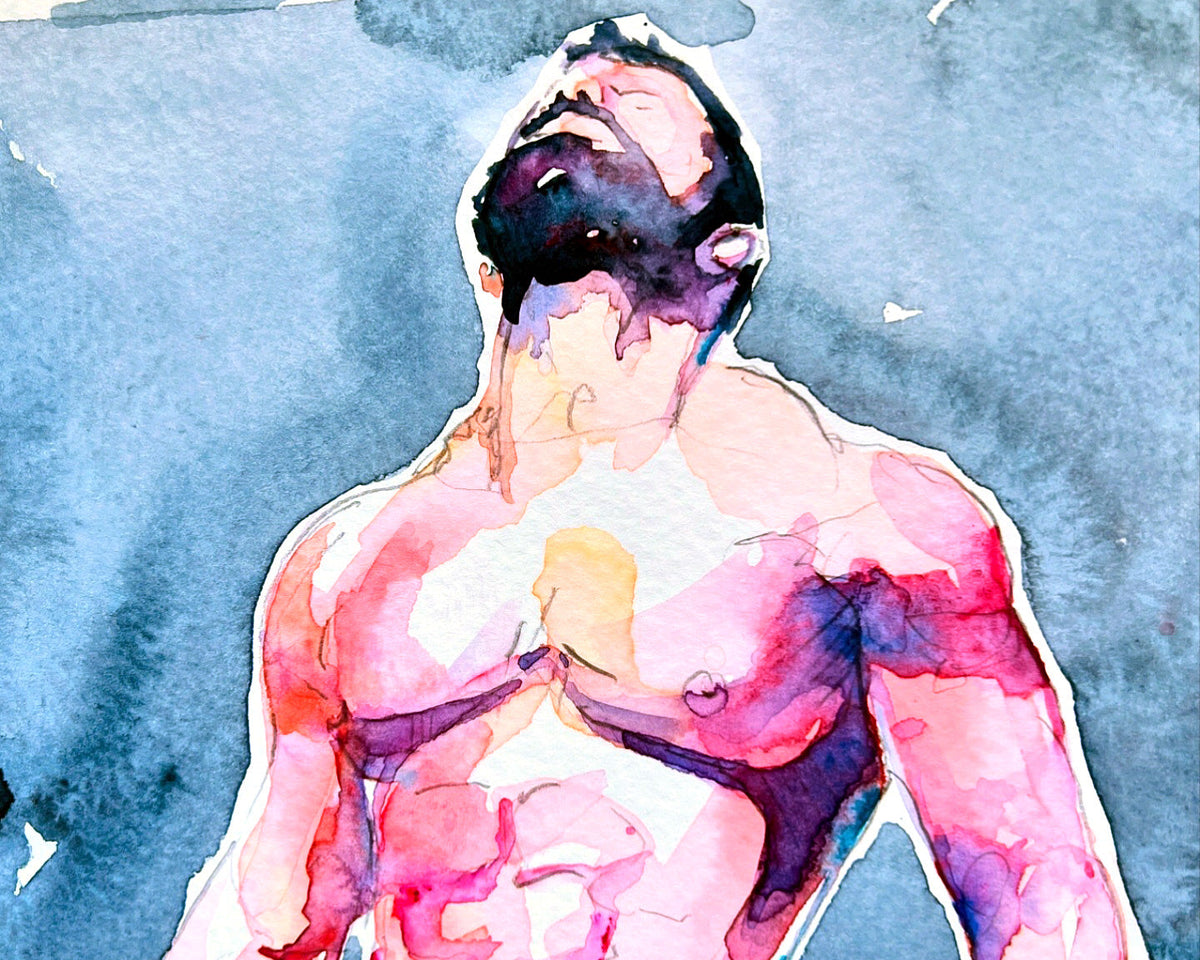
There is a reason I keep coming back to watercolor after more than twenty years of working with the male figure. Other media let you correct, layer, and revise until something feels right. Watercolor does not. It asks for a kind of trust that changes how the work comes out, and that shows in the finished piece in ways a collector can feel even if they cannot name exactly what they are responding to. Watercolor male figure art has a quality that is genuinely hard to replicate in any other medium, and I want to try to explain why.
A Medium with a Long Figure Art Tradition
Watercolor and the figure have a long history together. Anders Zorn, the Swedish painter working in the late nineteenth and early twentieth centuries, built a significant part of his reputation on watercolor figure work. His ability to capture skin, water, and light in a single fluid passage made him one of the most admired technical painters of his generation. His work now sits in the Swedish National museum and collections around the world.
What Zorn understood was that watercolor does not just depict the figure. It finds an analogy for it. Skin has translucency. Muscle has weight that shifts with light. Watercolor, applied with confidence and not overworked, catches both of those qualities in a way that oil paint, for all its richness, approaches differently.

What Watercolor Demands from the Artist
Working in watercolor with the male figure means making decisions you cannot take back. A mark is a mark. Water moves where it wants to, and learning to work with that rather than against it takes years. The figure has to be understood well enough that the drawing underneath the paint is already right before the brush touches the paper. There is no covering a mistake with another layer the way you can in oil or acrylic.
That constraint produces something. When a watercolor figure works, it has a kind of energy that comes from the medium itself, not just the subject. The light areas are the paper showing through. The darks are built with transparent layers that let earlier passages breathe underneath. The figure seems lit from within rather than painted from without.
Here is what I find most interesting about working with watercolor on the figure specifically:
- The translucency of the medium echoes the translucency of skin in natural light
- Wet on wet passages create soft transitions that feel anatomically true without being labored
- Negative space and the white of the paper become as active as the painted areas
- Each piece is genuinely unique because water and pigment behave differently every time
- The speed required to work wet creates a looseness that reads as confidence on the finished piece

What Watercolor Gives Back to the Collector
A watercolor print carries the record of all of those decisions. When you look at a well-executed watercolor figure, you are seeing the artist thinking in real time. The brushwork is not hidden. The choices are visible. That transparency between the maker and the viewer is part of what makes watercolor work feel personal in a way that more heavily worked media sometimes do not.
My Wildflowers collection uses watercolor in a way that lets the botanical elements and the figure share the same fluid ground. The paint moves across both without distinguishing between them, which creates a kind of unity that feels earned rather than arranged. That is something only watercolor makes easy.
The collector favorites in my shop are a good cross-section of what watercolor can do across different moods and approaches. Some are spare and precise. Others are loose and gestural. All of them carry that quality of immediacy that the medium demands.

Living with Watercolor
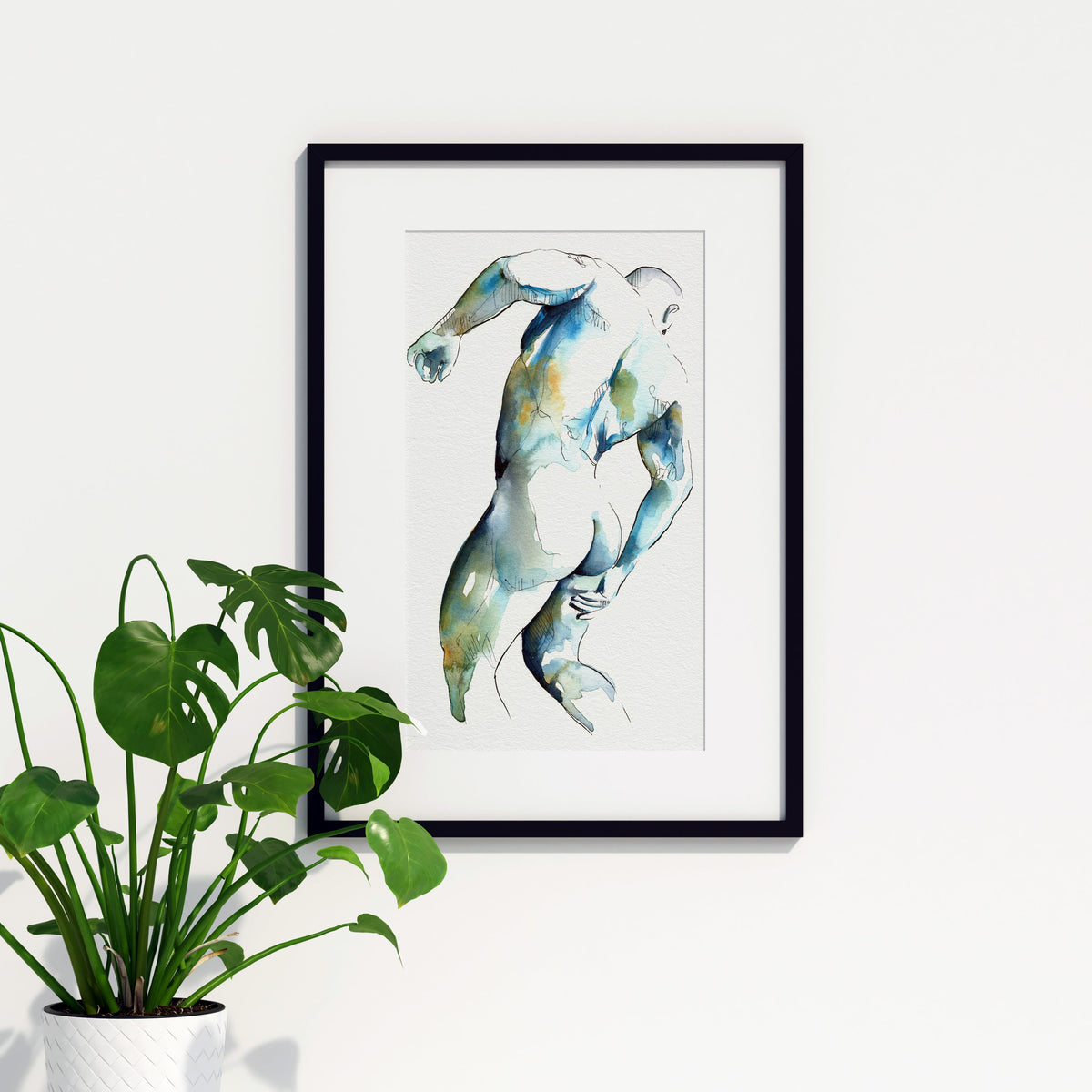
One thing collectors sometimes ask is how watercolor prints hold up over time. Archival pigment prints on quality paper reproduce the warmth and luminosity of the original watercolor faithfully and last for decades when properly framed behind UV-protective glass. The medium translates well to print in a way that some others do not, partly because the transparency and layering read clearly even in reproduction.
If you are thinking about where watercolor figure work fits in your home, the post on how to display male figure art in a modern home covers placement, framing, and light in detail. Natural light is particularly kind to watercolor. It changes through the day in a way that keeps the work feeling alive on the wall.
Share:
What Makes a Male Nude Painting Powerful? An Artist's View
How to Choose the Right Size Art Print for Your Wall