



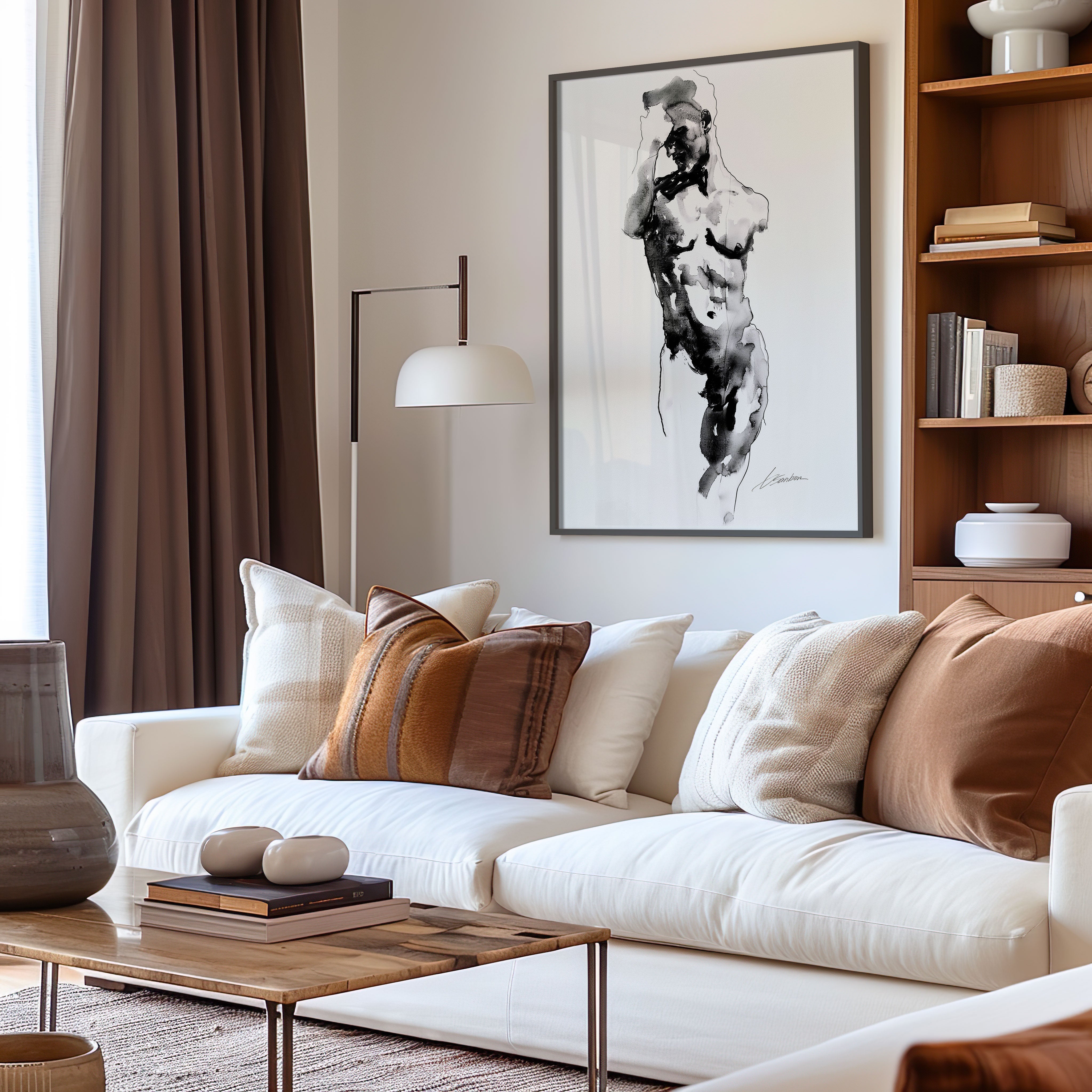
Something is shifting in how people collect art. The walls of contemporary homes tell a different story than they did a generation ago. Less landscape, less abstraction for its own sake, more figure. More presence. More work that feels like it knows something about being human.
Contemporary male figure art is part of that shift. And the collectors who are drawn to it tend to describe the experience the same way. They saw something that stopped them, and they couldn't quite explain why.
I've been painting the male figure for over two decades and I've had thousands of conversations with collectors about what drew them to a specific piece. The reasons are more consistent than you'd expect.
It Connects on a Personal Level
The most common thing collectors tell me is that the work felt personal. Not in a way they could always articulate. Just a sense that the figure in the painting was carrying something they recognized. A particular weight in the shoulders. A posture they'd seen in someone they loved. A quietness that felt familiar.
Contemporary male figure art tends to do this more directly than historical work because it isn't filtered through mythology or classical idealism. The figures are present. They exist in the same emotional register as the people looking at them. You can see that quality throughout my male figure art prints — each one an attempt to catch something true rather than something perfect.
That connection is what makes a piece feel necessary rather than decorative.
The Male Figure Carries Something Specific
There's a reason collectors return to the male figure specifically. It has a different cultural weight than other subjects. For centuries it was either heroic or hidden, either elevated to symbol or kept out of sight. Contemporary artists are doing something more interesting with it now.
Vulnerability. Tenderness. The quiet strength of simply existing in a body without performing anything. These are qualities that contemporary male figure art captures in ways that feel genuinely new even though the subject itself is ancient.
For queer collectors especially this work carries additional meaning. Representation, visibility, beauty on their own terms. But the appeal extends far beyond any single community. Anyone who has felt the gap between how masculinity is supposed to look and how it actually feels tends to respond to work that closes that gap honestly. My Lovers collection came directly from that place, figures that don't perform, they simply exist together.
What Collectors Are Actually Looking For
Based on conversations with collectors over the years, here is what tends to matter most when someone is drawn to contemporary male figure art:
- emotional resonance over technical perfection
- figures that feel present rather than posed
- work that rewards repeated looking
- an artist's voice that feels consistent and genuine
- something that changes the feeling of the room it lives in
That last one is worth noting. Collectors often describe the experience of living with figure art as different from living with other subjects. The figure is aware of you in a way a landscape isn't. It creates a quiet dialogue between the work and the room. If you want to understand the history behind that dialogue, my post on 11 male nude paintings that made art history traces how we got here.

Why It Works in Contemporary Spaces
One of the things that surprises new collectors is how well contemporary male figure art works in modern interiors. There's an assumption that figure work belongs in traditional or formal spaces, that it's somehow too serious or too charged for everyday living.
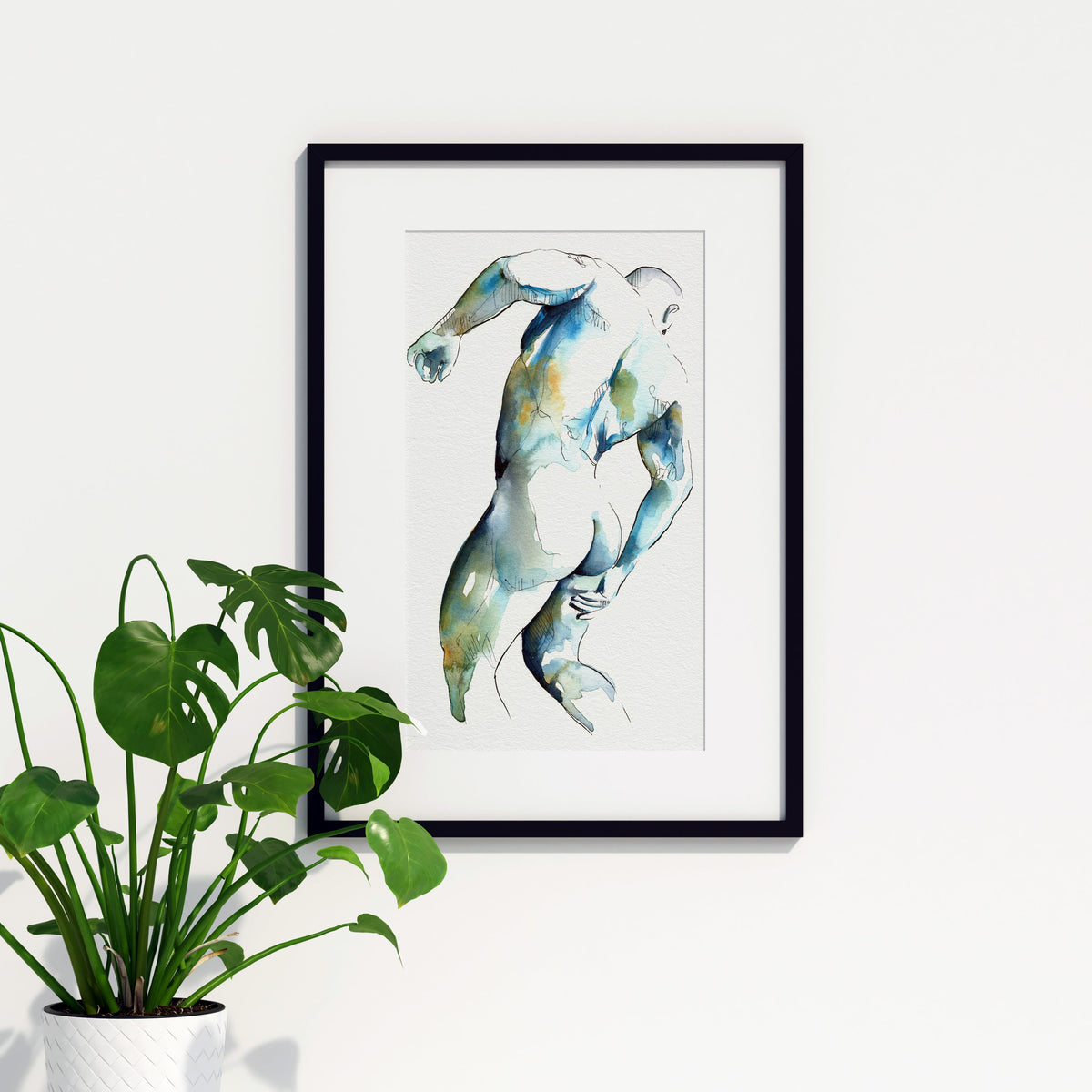
The opposite tends to be true. A strong figure piece grounds a room. It gives the eye somewhere to land. It adds warmth and humanity to spaces that can otherwise feel cold or impersonal. A loose expressive watercolor from my Drip collection brings one kind of energy, fluid, immediate, alive. A precise drawing from the Ink and Line collection brings another, quiet, considered, architectural. Both work. They just work differently depending on the room.
Platforms like Artsy have noted a growing interest in figurative work among younger collectors in particular, people who are actively seeking art that feels emotionally honest rather than decoratively safe.

Where to Start
If you're drawn to contemporary male figure art and aren't sure where to begin, the best advice I can give is to trust the piece that stops you. Not the one you think you should like. The one you keep coming back to.
My New Work collection is always the most current reflection of where the practice is right now. And if you want to go deeper into something more personal and one of a kind, my original paintings are where the work lives most directly.


Share:
What 19th Century Male Nude Art Got Wrong About the Figure
Watercolor vs Print: How to Choose the Right Piece for Your Space