




The 19th century produced some of the most technically accomplished male nude art in history. Artists dissected cadavers to understand muscle and bone. They spent years mastering proportion, shadow, and anatomy. They could render a body with almost photographic precision.
And yet something was missing.
Walk through a museum of 19th century academic painting and you'll find room after room of perfectly rendered male figures that feel strangely empty. Beautiful on the surface. Hollow underneath. Bodies that have been studied to death but never truly felt.
I've spent a lot of time thinking about why that is. And what it means for how I paint today.
The Academy and Its Rules
The dominant institution shaping European art in the 19th century was the École des Beaux-Arts in Paris. To study there was to enter one of the most rigorous artistic training programs ever devised. Students spent years drawing from classical sculpture before they were allowed to draw from life. They studied anatomy, perspective, composition, and color theory with obsessive precision.
The male nude was central to this training. Every serious artist had to master it. But mastery meant something very specific:
- accurate rendering of musculature and proportion
- classical poses derived from Greek and Roman sculpture
- idealized bodies free from individual personality or emotion
- mythological or historical subjects to justify the nudity
The goal was not to understand a person. It was to perfect a form.

What They Got Right
There is no denying the technical achievement. Artists like Ingres, Géricault, and Bouguereau could render the male body with extraordinary skill. The anatomy is correct. The light is beautifully observed. The draftsmanship is impeccable.
Bouguereau in particular pushed academic technique to its absolute limit. His Dante and Virgil in Hell (1850) is a genuinely powerful image — muscular figures locked in violent struggle, rendered with sculptural clarity and emotional intensity. When the academic tradition worked it really worked.
 What They Got Wrong
The problem wasn't the technique. It was the intention behind it.
Academic painting treated the male body as a problem to be solved rather than a presence to be felt. The figure was a vehicle for demonstrating mastery — of anatomy, of classical tradition, of institutional standards. The man inside the body was largely irrelevant.
This produced paintings that are technically brilliant but emotionally distant. Figures that look like sculptures rather than people. Bodies without interiority, without vulnerability, without the quiet truth that makes figurative art feel alive.
The academic tradition also imposed a rigid hierarchy of acceptable subjects. Mythology was acceptable. History was acceptable. A man simply being himself in an unguarded moment was not. The private, the tender, the ambiguous — all of it had to be justified by classical precedent or left out entirely.
That's a significant loss.

What the Cracks Revealed
Not every 19th century artist accepted these constraints without question. Géricault pushed against the idealizing tendency, bringing raw physicality and psychological darkness into his figure work. Eakins in America painted male bodies in real situations — swimming, wrestling, working — without mythological cover. Flandrin gave his seated youth an emotional interiority that the academic system didn't ask for but couldn't quite suppress.
These are the moments that still feel alive. Not because the technique is better but because something human slipped through.
What It Taught Me About Painting
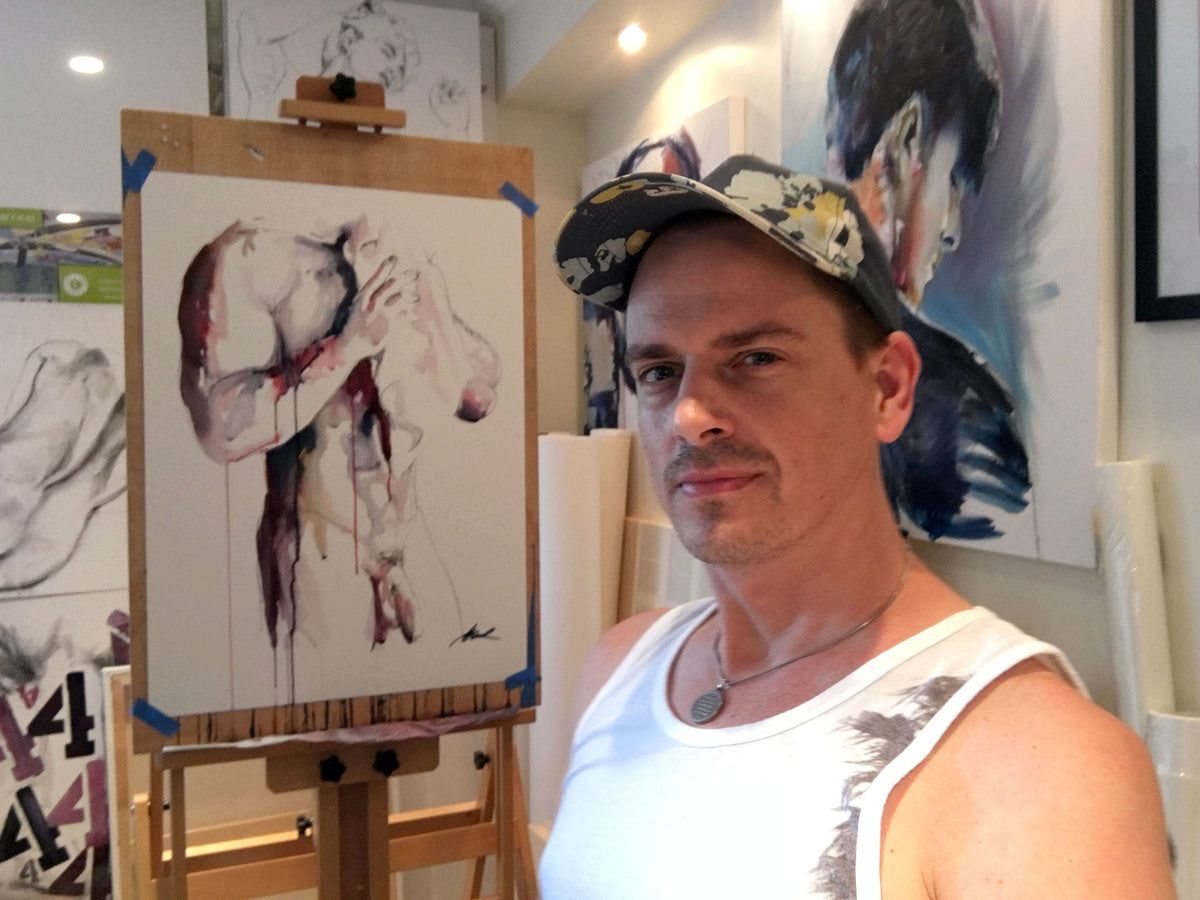
I came up through a tradition that still valued academic drawing. I learned anatomy. I practiced proportion. I spent years getting the body right in the way the 19th century defined right.
And then I started asking different questions.
What if getting it wrong was more interesting than getting it right? What if a figure that feels true is more valuable than a figure that is correct? What if the drip, the mark, the accident — what if those things were telling me something the careful rendering was hiding?
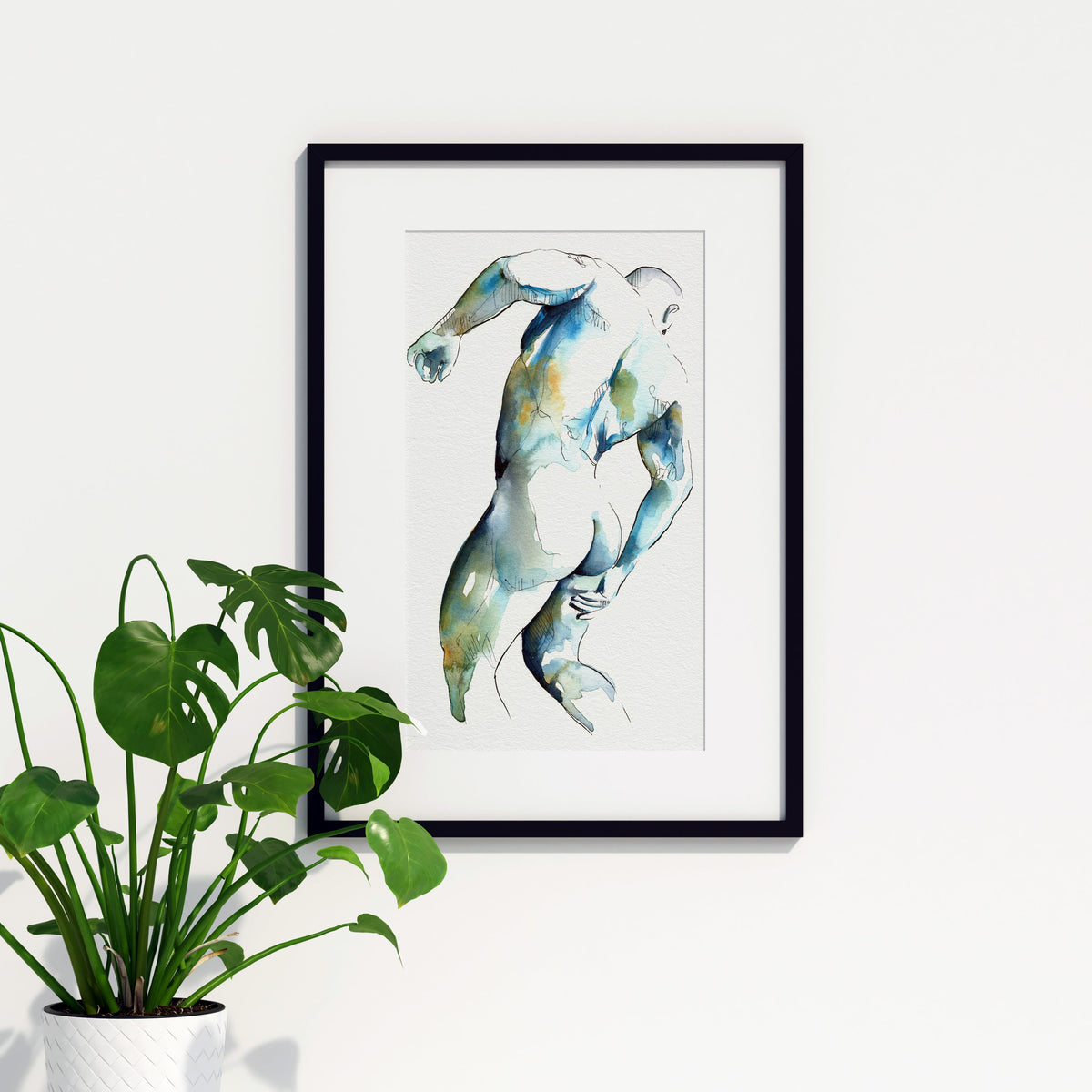
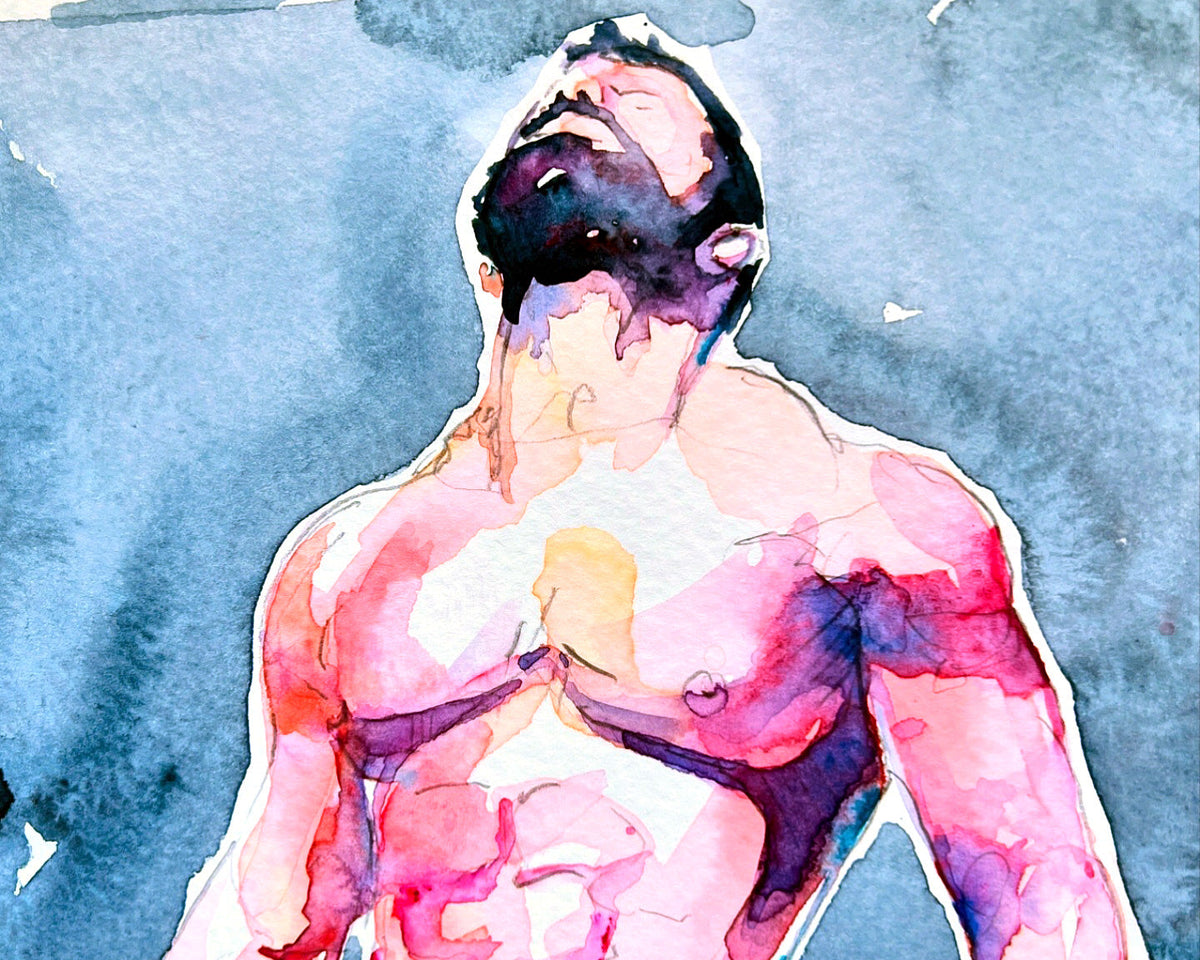
That's where my Drip collection came from. Not from rejecting the academic tradition but from pushing past it. Letting the paint move. Trusting instinct over measurement. Finding the figure through gesture and color rather than careful construction.
The Ink and Line work came from the same place — stripping everything back to a single unbroken mark and asking what it could carry on its own.
Both are responses to the same question the 19th century academic tradition raised and never quite answered: what is the male figure actually for?
The Answer I Keep Coming Back To
Not demonstration. Not idealization. Not classical precedent.
Connection. The figure is for connection. Between the painter and the subject. Between the painting and the viewer. Between one human experience and another.
The 19th century academics got so much right technically. But in their pursuit of perfection they often lost the thing that makes figurative art matter in the first place.
I'm still working out the balance. Every painting is another attempt. If you want to see where that search has taken me, my original paintings are the most direct record of it.
And if you want to keep reading about the history of the male figure in art, my posts on 11 male nude paintings that made art history and the Paul Cadmus post cover artists who were asking the same questions from very different angles.
Share:
Why I Keep Coming Back to the Male Figure
Why Collectors Are Drawn to Contemporary Male Figure Art