



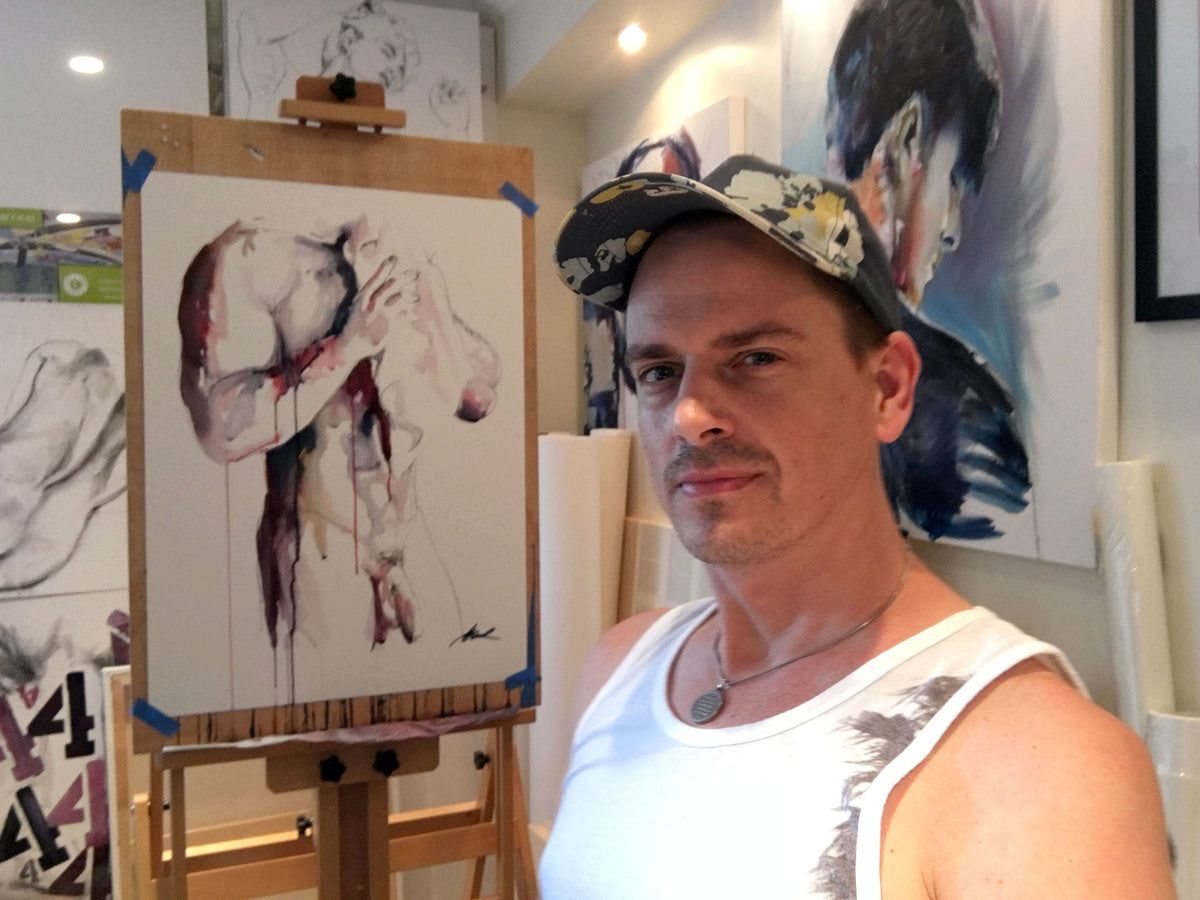
I've been painting the male figure for over twenty years. You'd think I'd have run out of things to say by now.
I haven't.
If anything the subject gets more interesting the longer I spend with it. Every painting teaches me something the last one didn't. Every figure I draw pulls me somewhere I wasn't expecting to go. And I still find myself standing in front of a blank sheet of paper thinking about the same things I was thinking about when I first started — gesture, weight, presence, emotion, the quiet that lives inside a body at rest.
So why the male figure? Why this subject, year after year?
I've been asked that question more times than I can count. Here's the honest answer.
It Started With Observation
I didn't choose the male figure because of a theory or an agenda. I chose it because it was in front of me.
In college I started drawing from life and something clicked. The weight of a body in space. The way light moves across muscle and bone. The story a posture tells without a single word. I was hooked immediately — not by the technical challenge, though that was real, but by what the figure seemed to carry emotionally.
I've been chasing that feeling ever since.

The Figure Is Never Just a Figure
Here's what I've learned after two decades. When you paint the human body long enough you realize it's never really about the body. It's about what the body holds.
A slouched shoulder can carry grief. A raised chin can carry pride. Two figures leaning toward each other can carry an entire relationship in the space between them. The male figure specifically carries things that don't get talked about enough — vulnerability, tenderness, the quiet strength of simply being present in your own skin.
That's endlessly rich territory for a painter. I don't think I'll ever find the bottom of it.
The Tate describes figurative art as work that retains references to the real world. But for me it's more specific than that. The figure is a way of talking about being human without having to explain it. You just show it. And if you show it honestly enough, people feel it.
How My Approach Has Changed
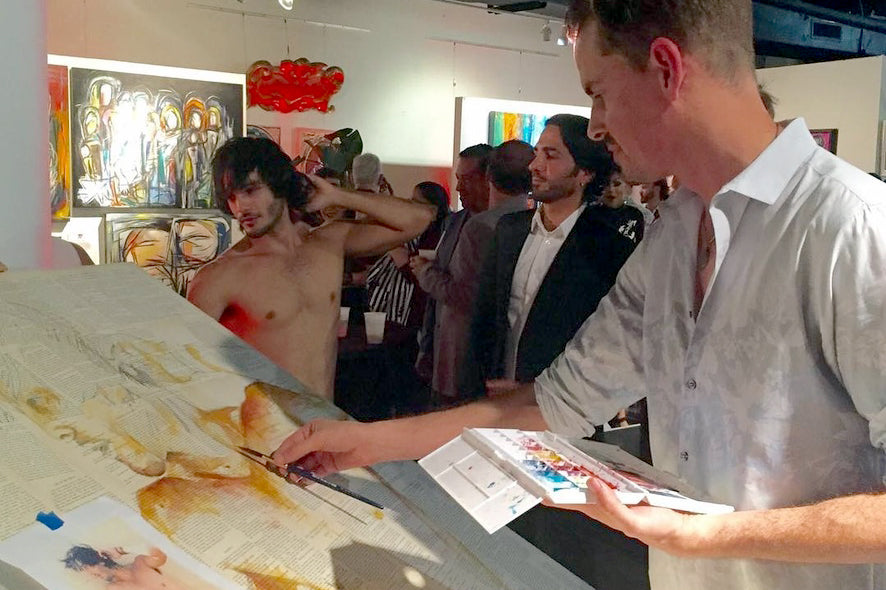
When I first started painting the male figure I was focused on getting it right. The anatomy. The proportions. The technical mastery that academic tradition demands. In 2015 I painted live at Art Basel Miami, working in real time in front of a crowd with a live model. That experience changed something. You can't overthink in front of an audience. You just have to commit. Over time that lesson became central to how I work — less interested in correctness and more interested in truth. Those are different things.
Over time that changed. I became less interested in correctness and more interested in truth. Those are different things.
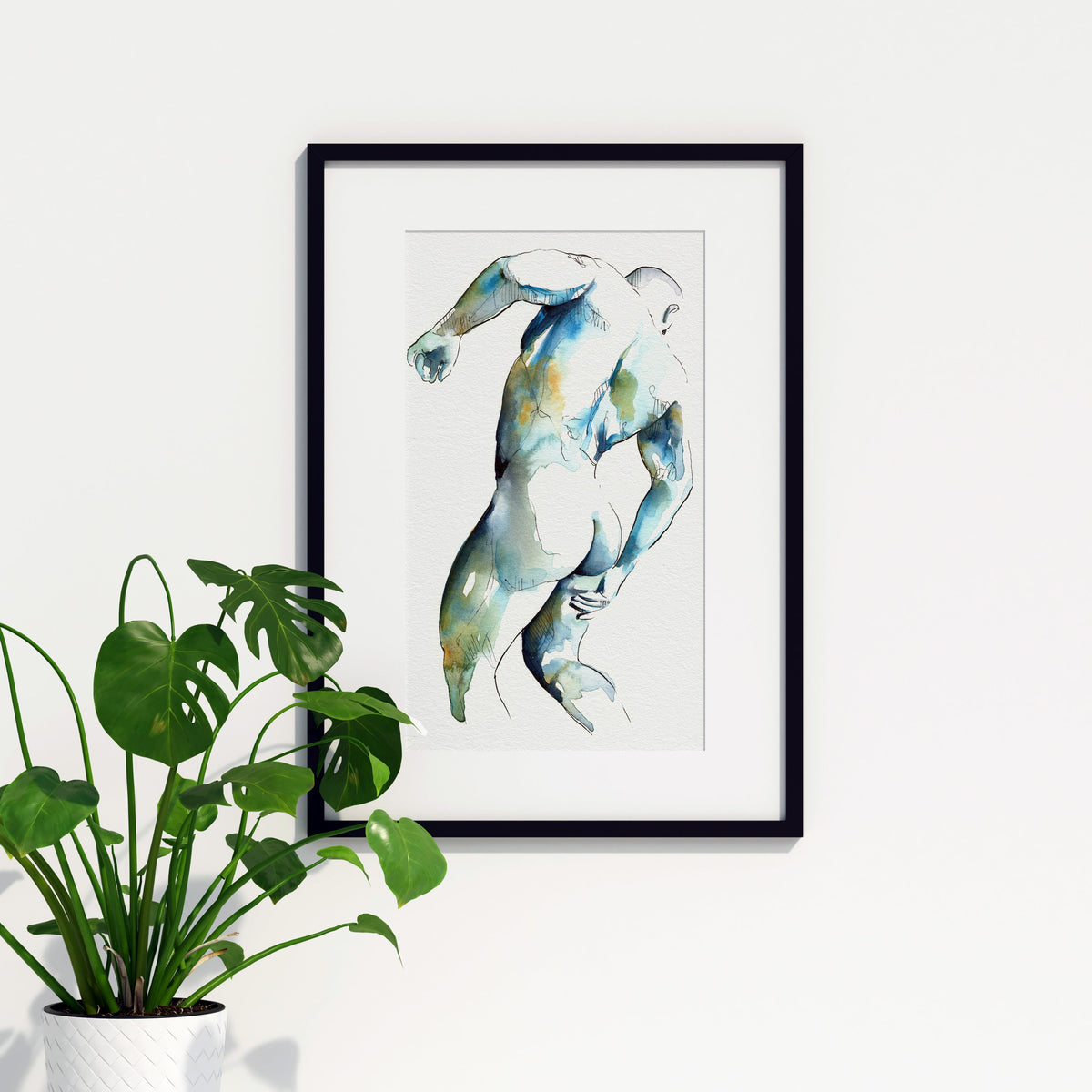
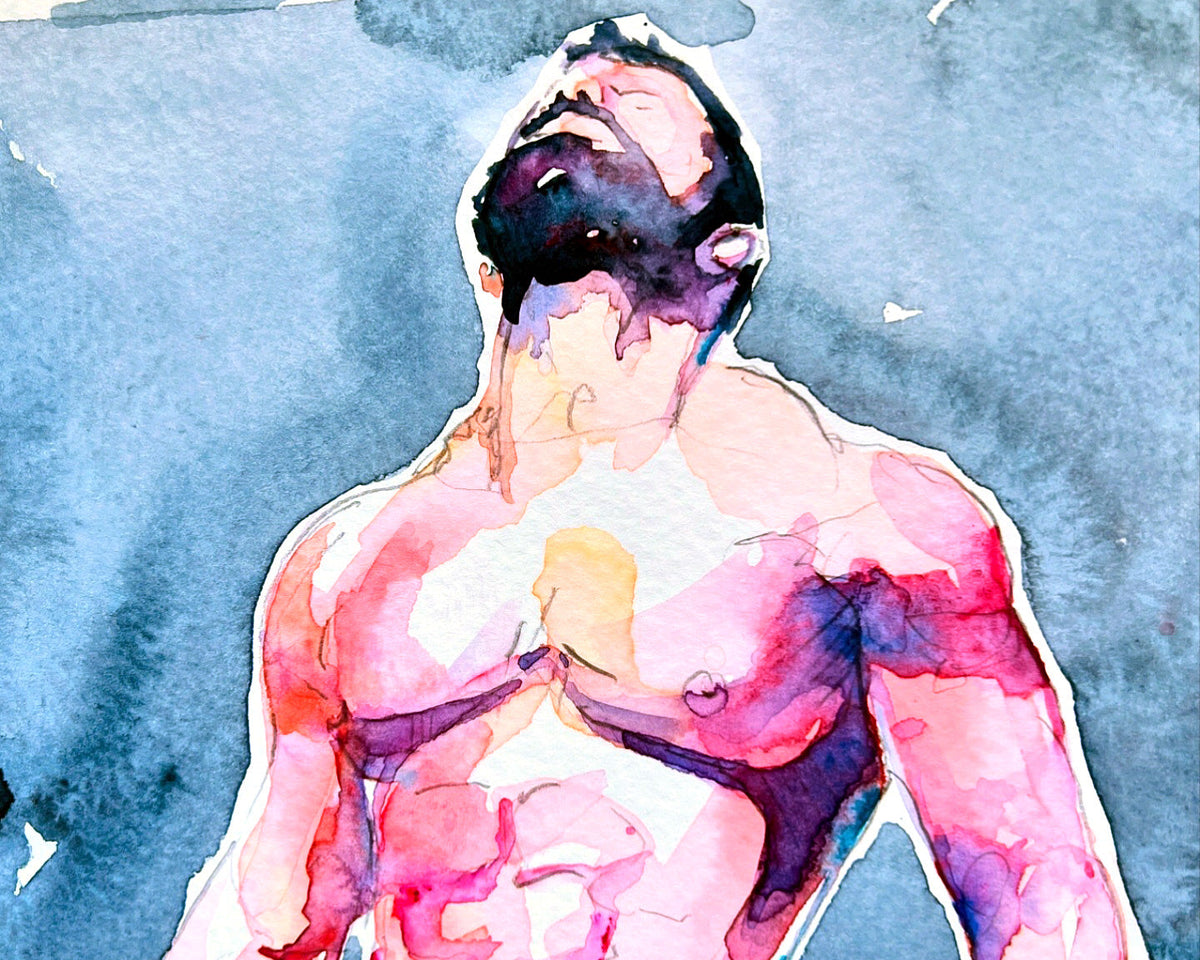
Truth is what happens when you stop trying to control the painting and let it move. It's what happens in my Drip collection — where watercolor moves freely across the paper, where gravity and instinct shape the figure as much as intention does. Where the paint itself becomes part of what the body is saying.
It's also what happens in my Ink and Line work — where a single unbroken line has to carry everything. No corrections. No second chances. Just the gesture and whatever truth it holds.
These aren't just stylistic choices. They're ways of getting closer to something honest.

What I'm Actually Looking For
I'm not interested in the heroic male nude. The idealized body. The symbol of strength and dominance that Western art has spent centuries perfecting.
I'm interested in the moment before the pose. The breath before the gesture. The figure caught between one thing and the next — not performing, not posing, just existing.
That's where I find what I'm looking for. In the quiet. In the unguarded. In the space where a body is just a body and somehow that's everything.
My original paintings are where that search lives most directly. Each one is a single attempt to catch something true before it disappears. Some come close. Some don't. But the search itself is why I keep coming back.

Why It Still Matters
The male figure has been part of human art making for thousands of years. From ancient Greece to the Renaissance to contemporary painting, artists have returned to it again and again because it keeps offering something new.
I'm part of that conversation. A small part, but a real one.
If you want to see where the search has taken me recently, my New Work is the best place to start. And if you want to understand the broader history of the male figure in art, my post on 11 male nude paintings that made art history is a good companion to this one.
The figure keeps pulling me back because it keeps telling me something I haven't fully heard yet. I don't think that's going to change anytime soon.
Share:
Male Gaze Art History: Who Really Gets to Look?
What 19th Century Male Nude Art Got Wrong About the Figure