



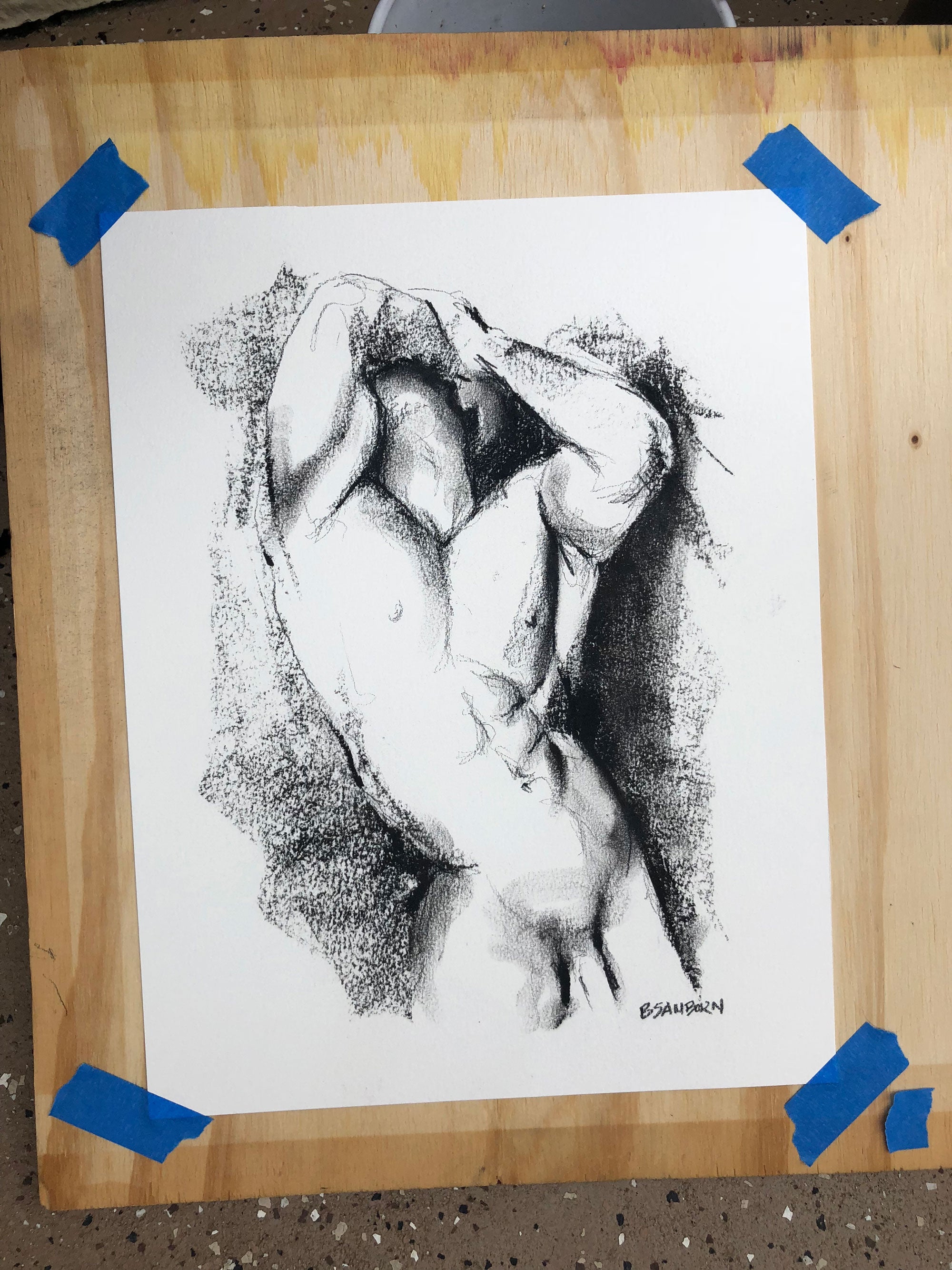
There is something about male torso art that has fascinated artists for as long as artists have existed. Not the full figure. Not the face. The torso specifically. That particular stretch of the body from the base of the neck to the top of the hips, the place where most of what we feel seems to live.
I have been drawing and painting the male torso for over two decades and I am still not finished with it. Every time I think I have understood what it is trying to say it shows me something new. That is either a sign of inexhaustible richness or a sign that I am a slow learner. Probably both.
Here is what I have learned about why this particular part of the body has mattered so much to so many artists across so many different cultures and centuries.
The Torso in Ancient Greece and Rome
The Greeks understood the torso as a symbol of human potential. Their sculptors studied the body with the same obsessive precision that their philosophers studied ideas, and the male torso became the primary vehicle for expressing ideals of strength, virtue, and beauty.
What is interesting is that the Greeks were not just making pretty objects. They were making arguments. A torso carved in marble made a statement. It showed what a human being could be at their best. The Metropolitan Museum of Art holds some of the finest examples of this tradition and seeing them in person makes the ambition behind them immediately clear.
The Romans inherited this tradition and pushed it further, using the torso in portraiture, in commemorative sculpture, and in the decoration of public spaces. The torso became architectural, something that organized space and communicated authority.
The Torso Across Cultures
What is striking when you look at figurative art across cultures is how consistently the torso appears as a significant subject. It is not just a Western preoccupation.
Japanese woodblock printing depicts the male torso in images of wrestlers and laborers, rendered with a specificity that goes beyond documentary interest into something closer to reverence. In Indian classical sculpture the torso is the primary carrier of spiritual energy, the place where breath and life force are most visibly expressed. African sculptural traditions often make the torso the most elaborated and symbolic part of a figure. It carried cultural information immediately readable to its original audience.
Across all these traditions the torso shares certain qualities that seem to transcend cultural context:
- it is the part of the body closest to the vital organs, the heart and lungs and stomach
- it is the most expressive part of the body after the face, registering tension, relaxation, effort, and emotion
- it is the part of the body that changes most visibly with age, labor, and physical experience
- it carries the marks of a life in ways that are both beautiful and legible
The Torso in Western Art History
The Renaissance rediscovered the classical torso and made it central to the education of every serious artist. Michelangelo is the obvious reference point but the tradition runs much deeper than one name.
Academic painters of the 19th century used the torso as a training subject, a way of mastering the relationship between light and form, between surface and depth. The result was sometimes breathtaking technical achievement and sometimes work that felt more like anatomy than art. The difference, as always, was whether the artist was genuinely looking or just executing a formula.
My post on 11 male nude paintings that made art history covers several works where the torso is the emotional and compositional center of the piece, and the contrast between the ones that feel alive and the ones that feel academic is instructive.
Male Torso Art as Emotional Object
Here is what took me years to fully understand. The torso is not primarily a formal or aesthetic subject. It is an emotional one.
When we look at a depicted torso we are not just evaluating proportion and light. We are reading the body for information about the person inside it. A torso that is held with tension says something different from one that is relaxed. A torso caught in motion says something different from one that is still. The way a person inhabits their own body is one of the most revealing things about them and the torso is where that inhabitation is most visible.
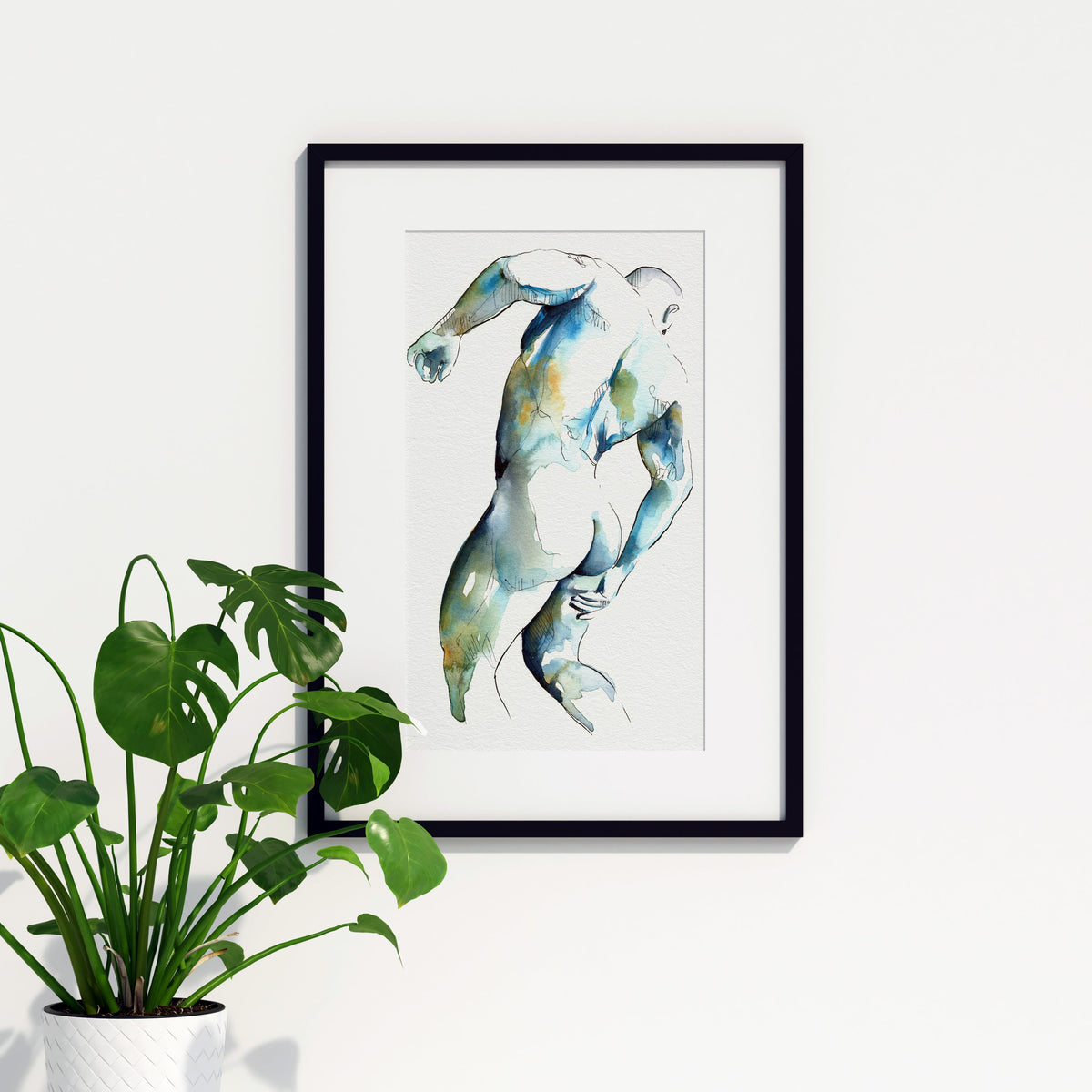
This is why the torso keeps appearing in my own work. My Ink and Line collection contains some of the pieces where I feel I have gotten closest to what I am reaching for, single unbroken lines that try to capture not just the shape of a torso but the quality of presence inside it.
If you want to understand more about what makes this kind of work powerful, my post on what makes a male nude painting powerful goes into that in depth.

Why the Torso Still Matters
Male torso art insists that a body is worth sustained attention.
We live in a moment when the body is more visible and more contested than it has perhaps ever been. Images of bodies are everywhere, filtered and curated and optimized for attention in ways that often strip them of the thing that makes a body interesting, which is the person inside it.
Art that takes the torso seriously as a subject is doing something different from that. It is insisting that a body is worth sustained attention. That the marks and tensions and particularities of a specific torso carry meaning that is worth trying to understand and communicate.
That is what I am trying to do when I paint the male torso. Not celebrate an ideal or demonstrate technique, though technique matters. Just pay attention to something real and put that attention somewhere it can be seen.

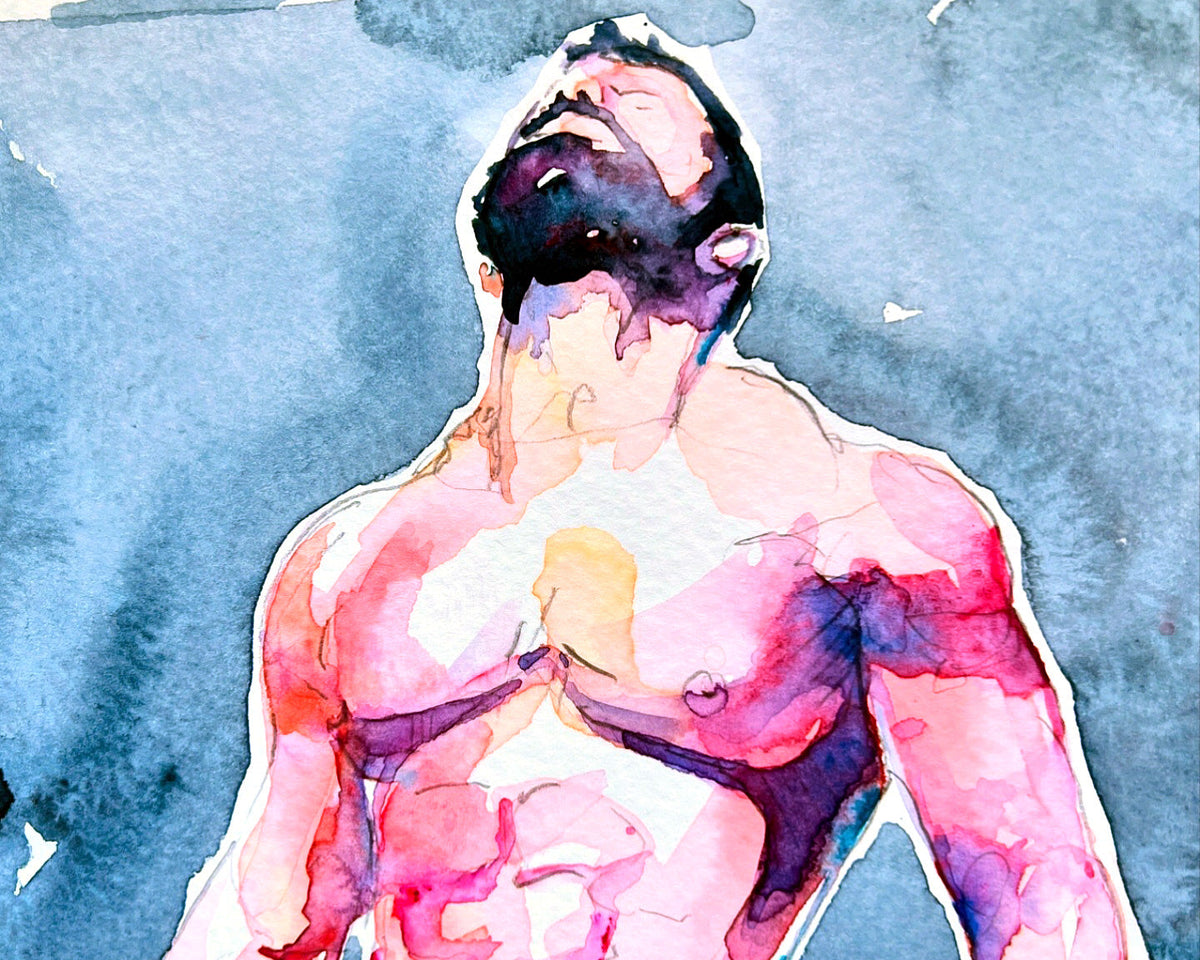
My original paintings are where that project lives most directly. Each torso painting is a single attempt to catch something specific before it disappears. Some come close. Some don't. But the attempt itself feels necessary every time.

Share:
A Beginner's Guide to Buying Emerging Male Nude Art
How Michelangelo Changed Male Figure Art Forever