




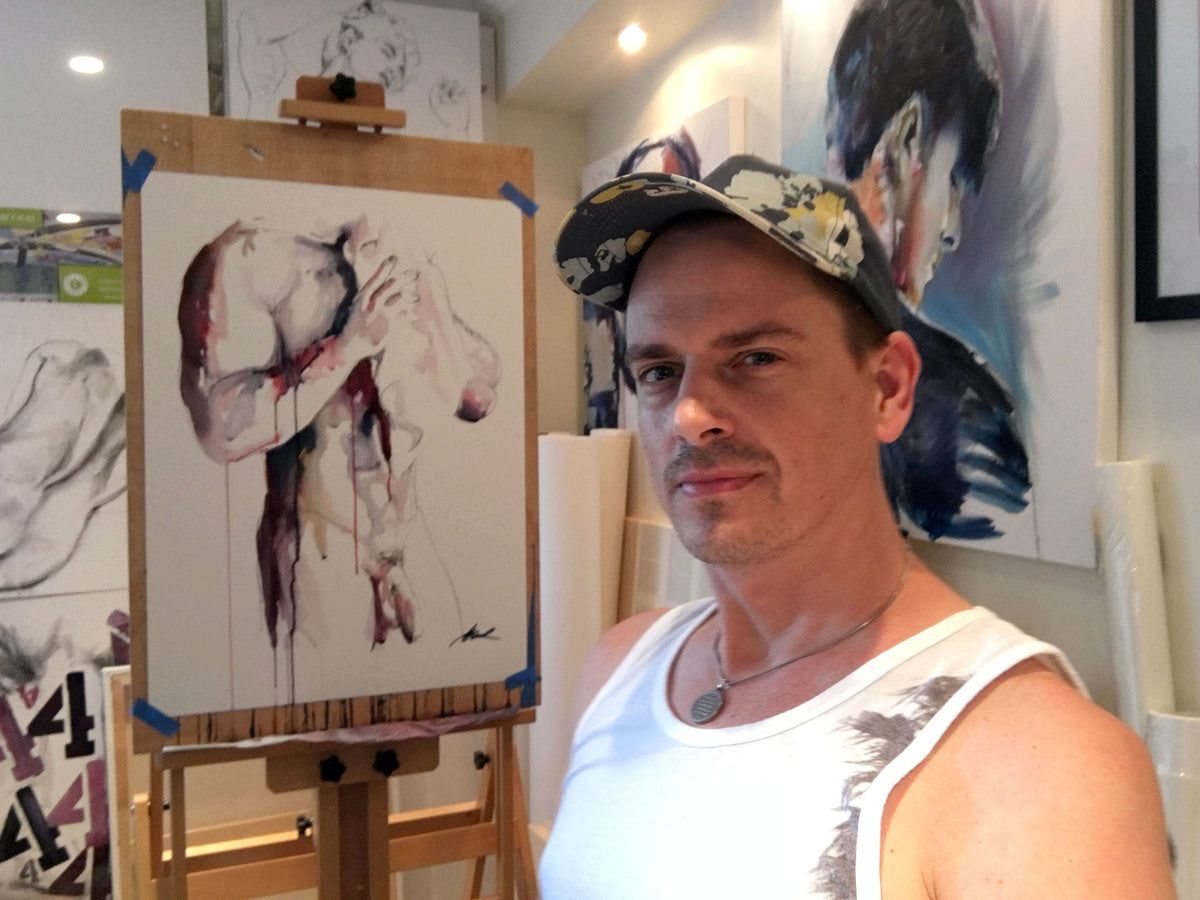
I have been inside the Musée d'Orsay — one of the world's great collections of male nude art. I sat on the floor of that extraordinary building with my sketchbook on my knee and painted the sculptures around me. The scale of the place gets you first — that vast glass ceiling, the light falling across centuries of stone and canvas. And then the work itself starts to speak.
It is one of the most significant collections of 19th century art in the world. And it has a complicated relationship with the male nude.

The Exhibition That Asked a Big Question
In 2013 the Musée d'Orsay opened Masculin/Masculin — L'homme nu dans l'art de 1800 à nos jours. Over 200 paintings, sculptures, and photographs of the naked male body gathered under one roof. A historical survey spanning from 1800 to the present day.
It was audacious. And according to critics, it was also a mess.
The show placed wildly different works side by side without enough context to connect them. Jean-Jules Antoine Lecomte du Nouÿ's strange Mort Pour La Patrie — a dying soldier rendered with his backside prominently displayed — hung near bold works by Schiele, Moreau, and David Hockney. Viewers were left asking what a heroic death in 1892 had in common with a dreamy figure painted in 1966.
But maybe that confusion was part of the truth.

What the Male Nude Has Always Carried
The male nude in Western art has never been just a body. It has been a symbol of virtue, power, vulnerability, rebellion, and desire — often all at once.
Unlike the female nude which has dominated galleries, textbooks, and museum postcards for centuries, the male body has been hidden behind mythology, justified by classical precedent, and sanitized by academic tradition. You could paint a man naked if he was a god, a hero, or a martyr. If he was simply a man, that required more careful handling.
The key works in the Western tradition reflect this tension:
- classical sculpture elevating the male body as symbol of human perfection
- 19th century academic painting using the nude as a technical exercise
- Symbolist and Expressionist artists pushing toward something more personal and charged
20th century artists finally naming what had always been present — desire, identity, queerness.

The Ancient Greeks and What Came After
The ancient Greeks were the first to truly celebrate the masculine form. Their idealized representations portrayed the male body as a symbol of athletic and moral beauty. The sculptures that line the Orsay's central nave are direct descendants of that tradition.
One piece I remember vividly from college art history — the Barberini Faun, a life-size reclining satyr displayed in loose sensual abandon — represents one of the rare moments where the classical tradition allowed genuine eroticism into the male figure. He is a follower of Dionysus, the god of pleasure, and the sculpture doesn't pretend otherwise. It was startling then and it's startling now.
What the Orsay Exhibition Got Right
The real gift of Masculin/Masculin wasn't its curation. It was its audacity. For centuries artists were required to study the male nude in French academies while their finished works rarely made it to public view. Whether that was a moral issue or a discomfort with what the male nude might reveal about desire and queerness, male nudity always came with asterisks.
The Orsay put 200 of those asterisked works in one room and said — look at this. All of it. The heroic and the tender, the academic and the raw, the mythological and the explicitly personal. Look at what has been here all along.
From Michelangelo's David to Schiele's angular self-portraits to the quiet figures of Flandrin, the male form has always served as a mirror. It reflects not just ideals but flaws, tension, intimacy, and shifting social norms. For queer artists and audiences especially it has been a quiet revolution — proof that beauty doesn't need to perform. It just needs to be seen.
What I Took Away
Sitting inside the Musée d'Orsay with my sketchbook, surrounded by two centuries of figure work, I felt the weight of that conversation pressing down on my own practice. Every artist who had painted or carved or photographed the male body before me had navigated some version of the same questions I navigate now.
What is this figure for? What can it carry? And what, exactly, am I allowed to show?
The Orsay exhibition was imperfect. But imperfection is sometimes more honest than a clean narrative. The history of the male nude isn't linear. It's tangled up in politics, shame, pride, longing, and beauty. It deserves more than a dusty textbook or a scattered museum wall.
It deserves to be part of the conversation. And I intend to keep it there.
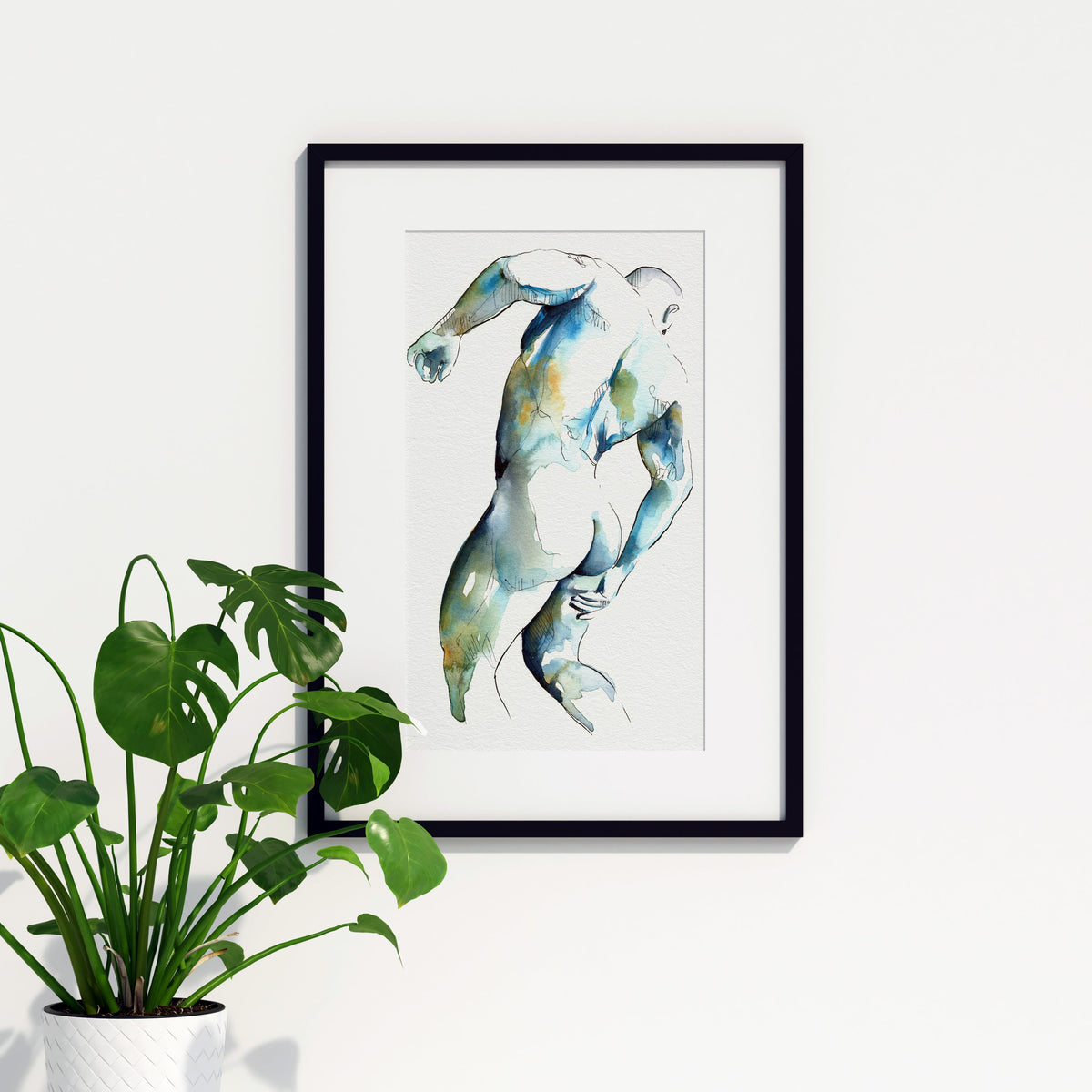
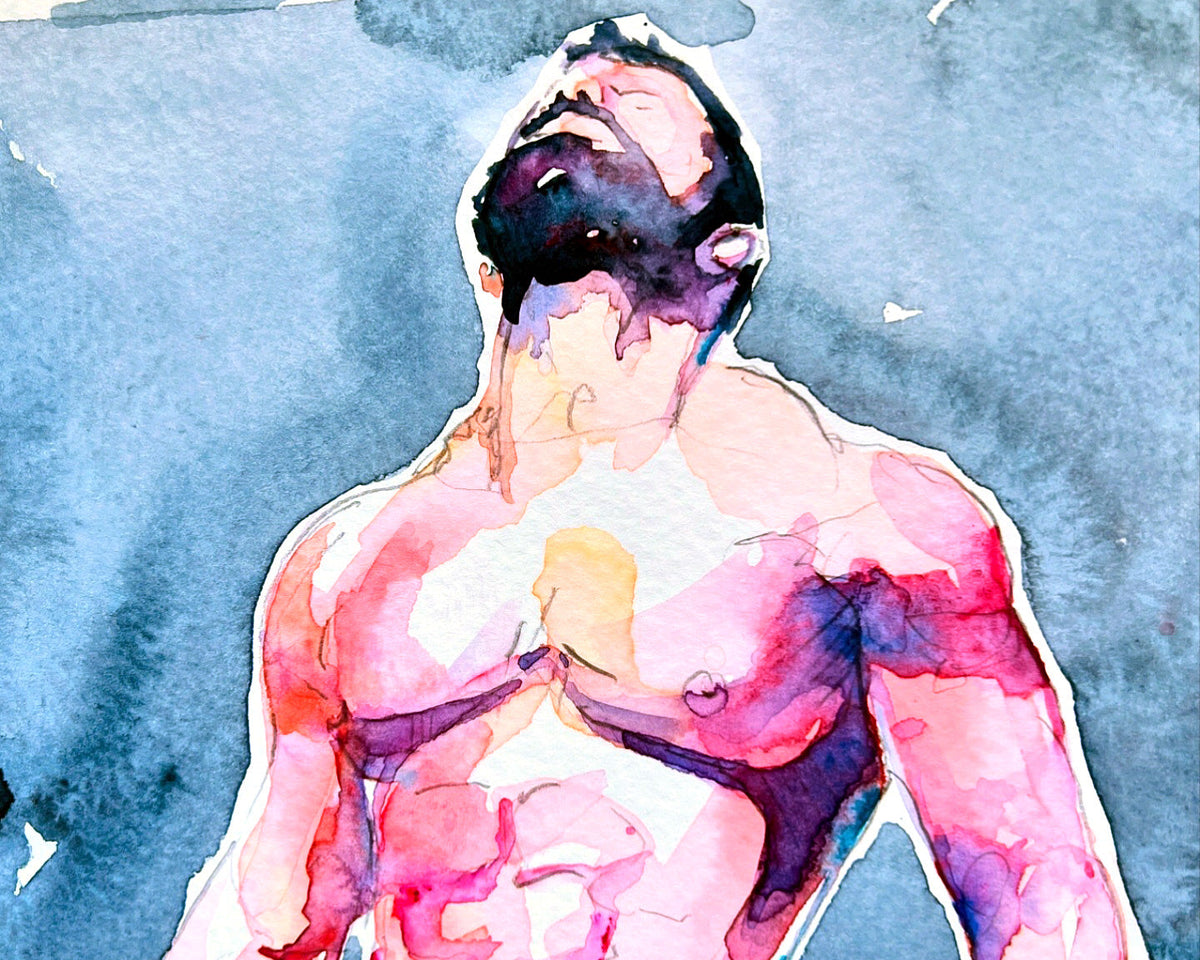
If you want to see where that conversation lives in my own work, explore my male figure art prints, my Drip collection, and my original paintings. And if you want to keep reading about the history of the male nude, my posts on 11 male nude paintings that made art history and 12 famous male nude paintings that changed art forever are good places to continue.

Share:
How Michelangelo Changed Male Figure Art Forever
Why Male Nude Art is a Must-Have for Any Art Collection