

Some works of art leave you speechless. Others leave you with questions you can't stop turning over. Antonio Pollaiuolo's Battle of the Nude Men somehow manages to do both.
Created sometime between 1470 and 1495, this engraving is one of the most famous and most debated images of the Italian Renaissance. Ten nude men wrestle, clash, and strain against each other with visible intensity. Nobody wins. Nobody loses. And nobody — not even art historians five centuries later — can say with certainty what it means.
What Is the Battle of the Nude Men?
The Battle of the Nude Men is a large engraving, roughly 15 by 23 inches, showing ten figures locked in combat across a frieze-like composition. Some carry weapons. Some fight with bare hands. A decorative border of foliage frames the scene, giving it an almost theatrical quality.
What makes it remarkable isn't just the subject. It's the bodies themselves.
Pollaiuolo was among the first Renaissance artists to study human anatomy through dissection. He didn't guess at musculature — he mapped it. Every figure in this print reflects that obsessive study:
- muscles shown in full contraction and extension simultaneously
- figures twisted into positions that reveal maximum anatomical detail
- limbs exaggerated just beyond realism to heighten the sense of force and motion
Leonardo da Vinci famously mocked the result, calling it a sack of nuts. But even that critique acknowledges what Pollaiuolo was doing — pushing the male body to its expressive limit.

More Than Anatomy
What separates this work from a medical illustration is what Pollaiuolo layered on top of the anatomy. Rage. Pain. Confusion. Physical exhaustion. These men are not poses. They are states of being.
There is no hero in the scene. No clear villain. The figures with headbands and the figures without are equally matched, equally caught, equally human. Their individuality is swallowed by form, force, and movement. And yet each face tells a different story.
That tension — between the clinical and the emotional, between idealization and raw physicality — is what makes Renaissance male nude art so endlessly interesting. It was never just about getting the body right. It was about what a body could carry.
The Queer Reading
Contemporary scholars have noted something else in this print. The intimacy of the combat. The way bodies press against each other, grip each other, wrap around each other. The absence of any clear moral or narrative framework.
The Whitworth in Manchester has exhibited this print as part of its Queering the Whitworth project, inviting viewers to bring new eyes to works that institutional tradition has long filed under "classical" or "academic." Sometimes a fight isn't just a fight. Sometimes being seen — really seen, in full physical presence — is the whole point.
What This Means for How We See the Male Figure Today
Pollaiuolo didn't invent the male nude. But he did something that changed its trajectory. He insisted that the male body was worthy of the most serious, most obsessive, most technically demanding artistic attention available. Not as a symbol. Not as mythology. As form in motion. As flesh and energy and emotional weight.
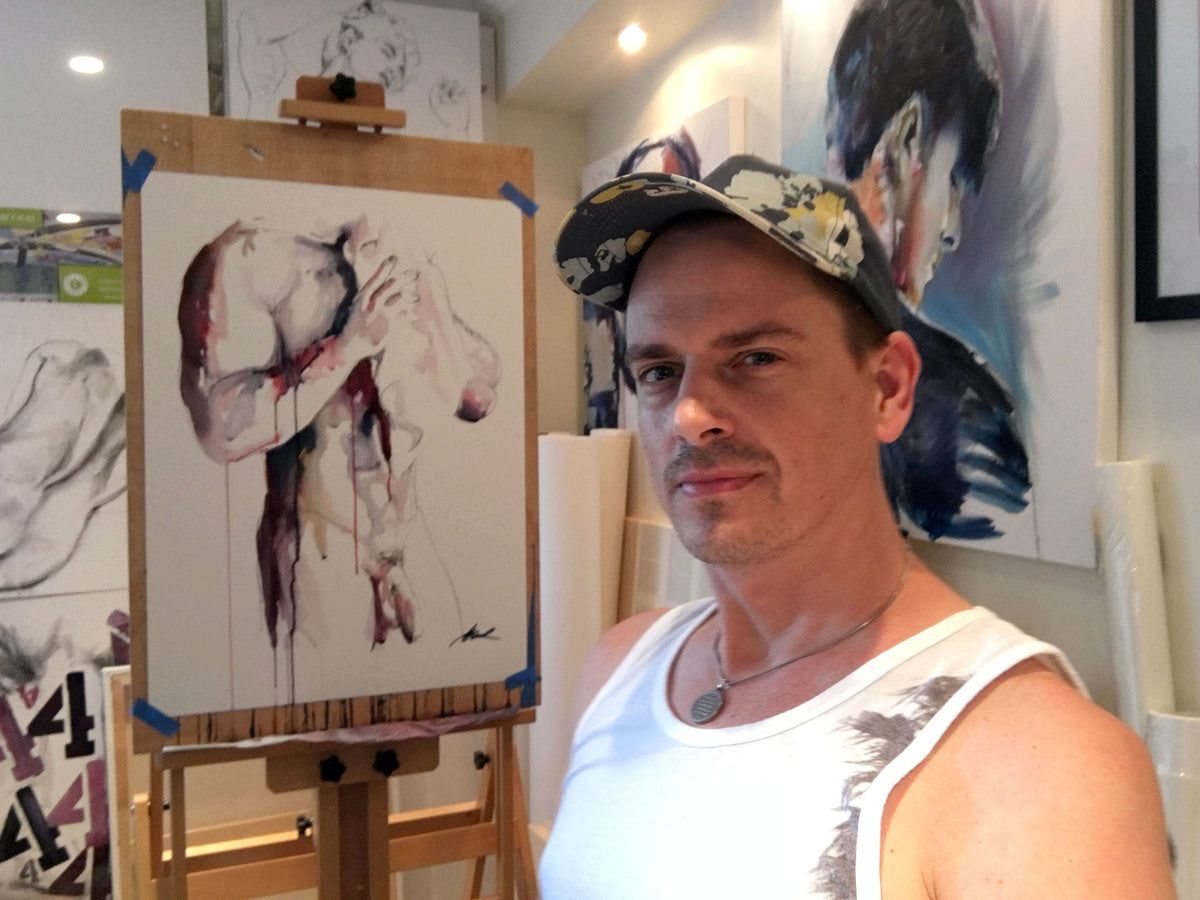
That insistence echoes through five centuries of figure work — including my own.
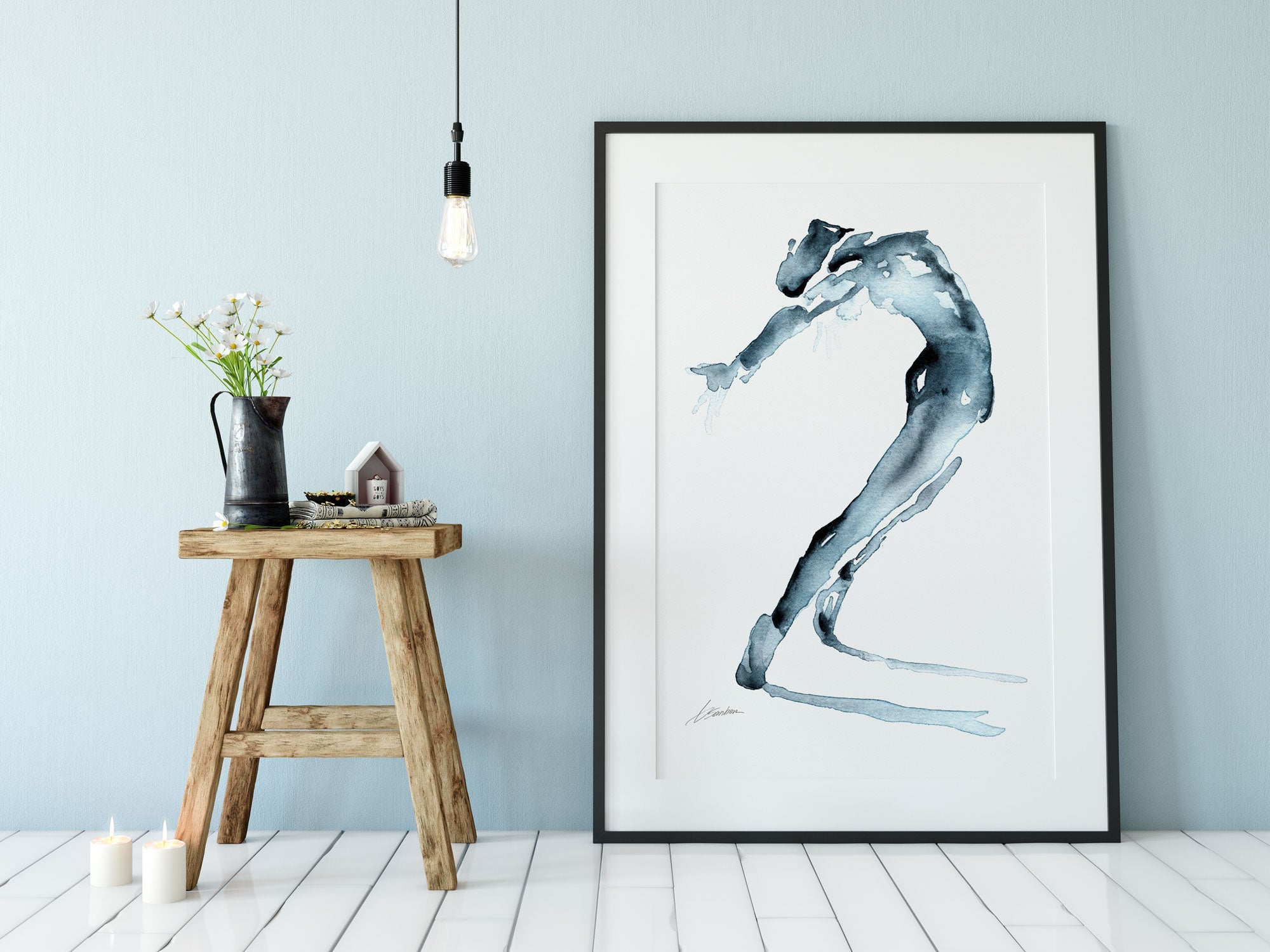
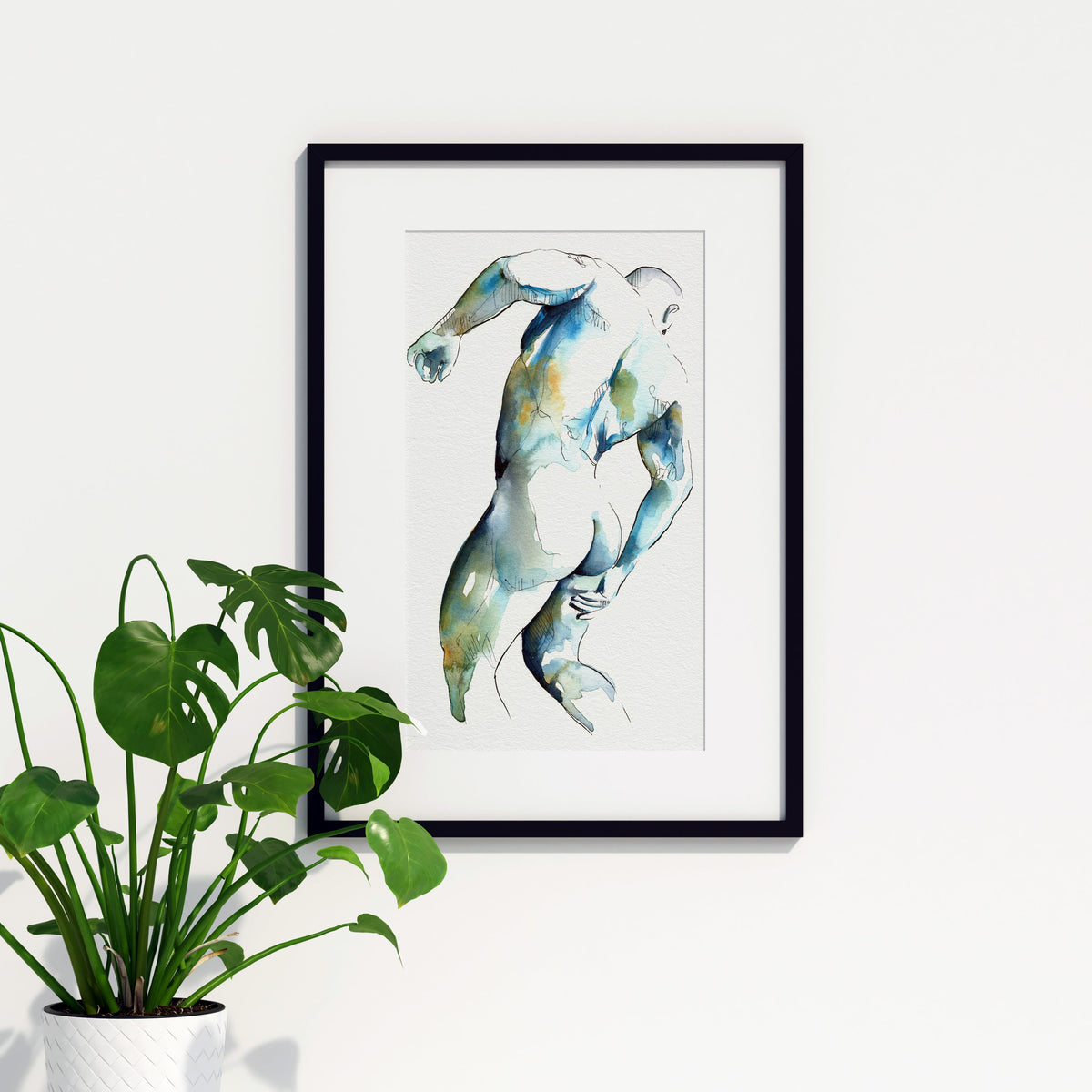
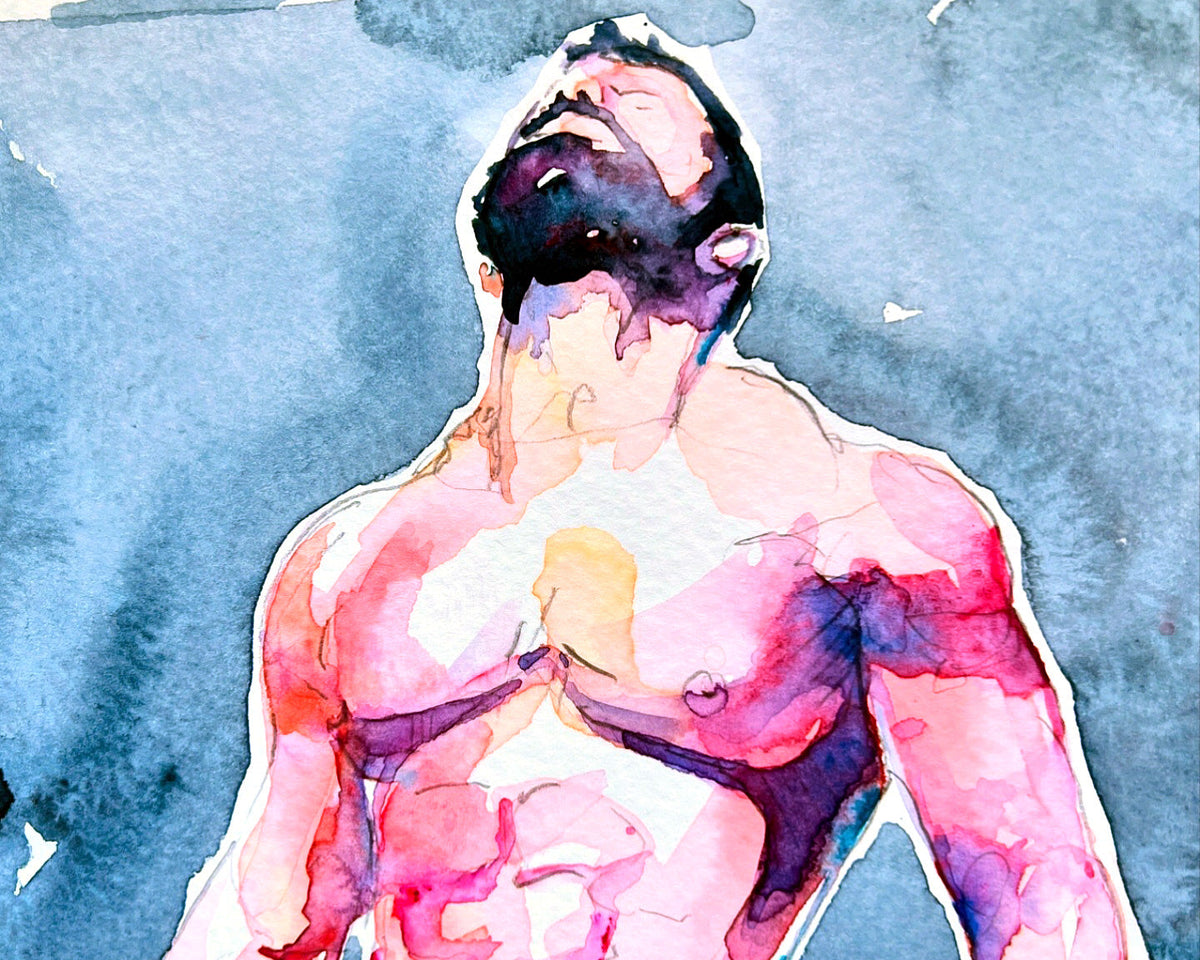
When I paint the male figure I'm not thinking about Pollaiuolo directly. But I am thinking about the same things he was thinking about. How much can a body carry? How much can a gesture say? Where does anatomy end and emotion begin?
If you want to see where that conversation has landed in my own practice, you're welcome to explore my Drip collection, my male figure art prints, or my original paintings. The questions Pollaiuolo was asking are ones I'm still asking every time I pick up a brush. And if you want to keep reading about the history of the male nude in art, my post on 12 famous male nude paintings that changed art forever covers some of the broader conversation he was part of.
Share:
Paul Cadmus: The Male Nude Art That Refused to Look Away
Male Gaze Art History: Who Really Gets to Look?